- Visitors
- Researchers
- Students
- Community
- Information for the tourist
- Hours and fees
- How to get?
- Visitor Regulations
- Virtual tours
- Classic route
- Mystical route
- Specialized route
- Site museum
- Know the town
- Cultural Spaces
- Cao Museum
- Huaca Cao Viejo
- Huaca Prieta
- Huaca Cortada
- Ceremonial Well
- Walls
- Play at home
- Puzzle
- Trivia
- Memorize
- Crosswords
- Alphabet soup
- Crafts
- Pac-Man Moche
- Workshops and Inventory
- Micro-workshops
- Collections inventory
- News
- Students
- Tattoos of La Señora de Cao: What elements did the Mochica use to tattoo her?
News
CategoriesSelect the category you want to see:
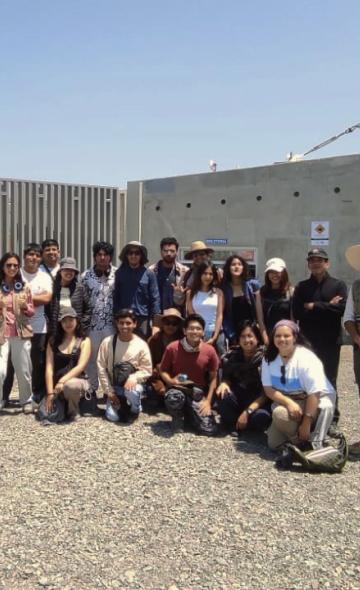
PUCP Archaeology Students Visit the El Brujo Archaeological Complex ...
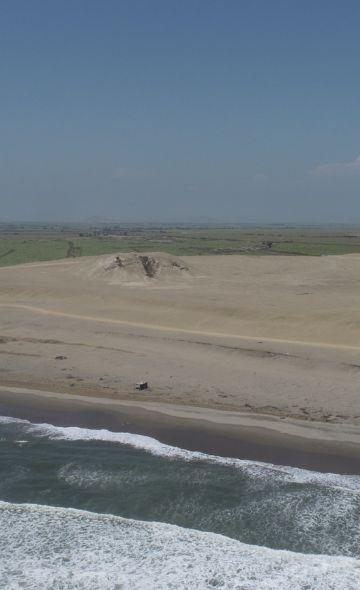
The Republican Settlements of El Brujo: Notes for the Recent History of Magdalena de Cao ...
To receive new news.
By:
For thousands of years, the presence of tattoos on the body has meant an important and differentiating practice. In pre-Columbian cultures, tattoos were marks that could differentiate castes and social classes. In the case of the Mochica culture, it has been reported that the practice of tattooing was so common among men and women that it has been thought that possibly at least 43% of the population could have been tattooed.
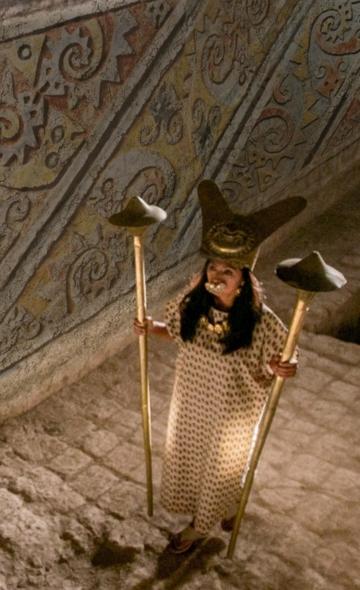
Twelve years ago, the Lady of Cao was discovered in an enclosure that had endured the ravages of nature for more than 17 centuries. This discovery changed many paradigms that were held to date of women in pre-Inca culture. Not only because of all the offerings found in her grave, but because of the large number of tattoos that she wore on different parts of her body.
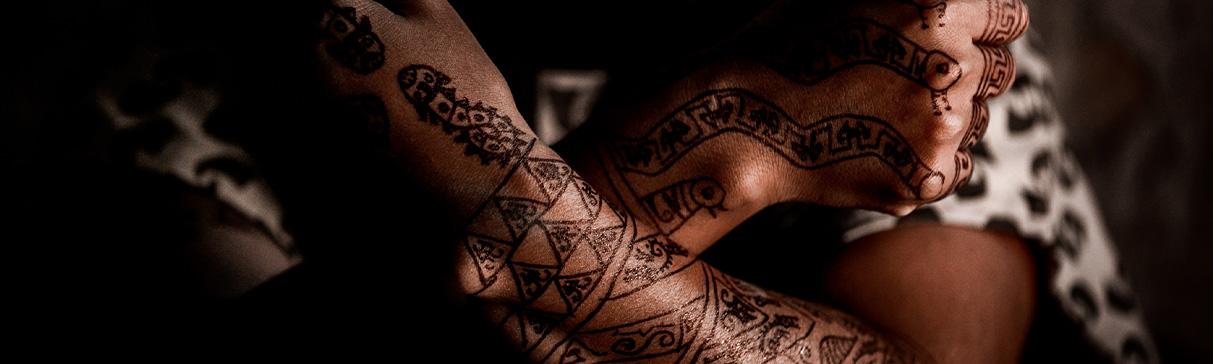
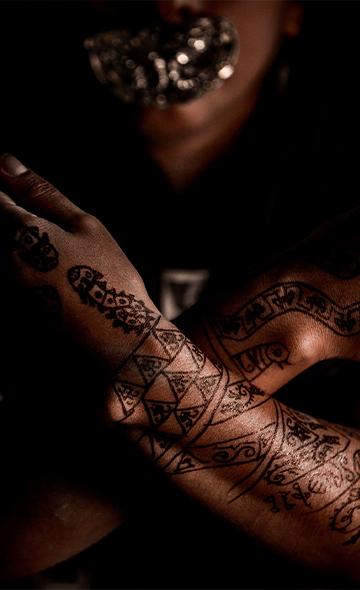
The tattoos of the Lady of Cao were found especially on forearms, hands and feet, these represented figures of snakes and spiders, both linked to the fertility of the earth and water; jaguars, which symbolizes the lunar animal; and geometric figures, which strengthen the idea that she was also engaged in spiritual activities, and other political-religious offices.
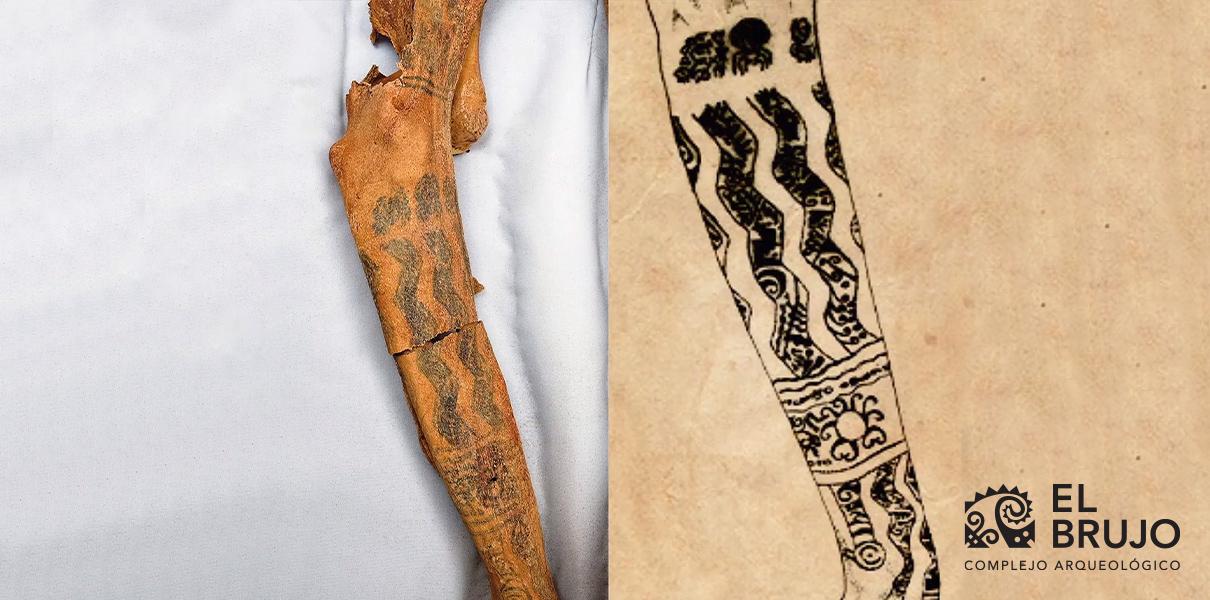
In the Scanning Electron Microscopy laboratories of the Museum of Natural Sciences of Madrid, an investigation was started in which the composition of the pigments used to make those tattoos was analyzed. The result: In the case of the red dye in one of the samples, it was found to be cinnabar, that is, mercury sulfide. In the tattooed area, ferrous oxide was found, with traces of elemental iron and other chemical elements, this pigment gives a blue-black color to the skin, and is currently also used in cosmetics and beauty products. In texts on pre-Hispanic botany, it is stated that this dye can be found in the juice of the immature fruits of the “jagua”.
It is believed that these Mochica tattoos were made with different types of needles such as fish spines, parrot feathers, spiny shell appendages, etc. The technique consisted of punctures in the skin and then introducing the color. Another interesting fact is that there are also suspicions that women were the artists who were dedicated to these tasks.
Students , outstanding news