- Visitors
- Researchers
- Students
- Community
- Information for the tourist
- Hours and fees
- How to get?
- Visitor Regulations
- Virtual tours
- Classic route
- Mystical route
- Specialized route
- Site museum
- Know the town
- Cultural Spaces
- Cao Museum
- Huaca Cao Viejo
- Huaca Prieta
- Huaca Cortada
- Ceremonial Well
- Walls
- Play at home
- Puzzle
- Trivia
- Memorize
- Crosswords
- Alphabet soup
- Crafts
- Pac-Man Moche
- Workshops and Inventory
- Micro-workshops
- Collections inventory
- News
- Students
- Goldsmithing in the Mochica culture: discover the metal ornaments of the Lady of Cao
News
CategoriesSelect the category you want to see:
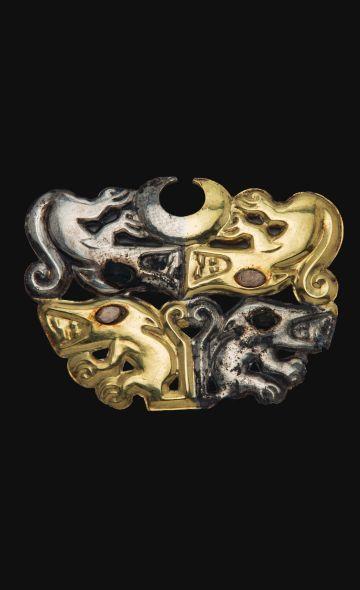
The 44 Nose Ornaments of the Lady of Cao at El Brujo (La Libertad, Peru): Emblems of Power and Moche Duality ...
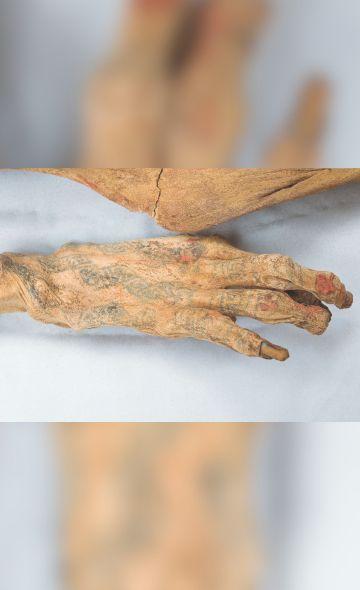
Cinnabar: The Mineral That Preserved the Lady of Cao? ...
To receive new news.
By: Complejo arqueológico El Brujo
The Mochica culture, known for its mastery of goldsmithing, left us an impressive legacy of art and technique. An outstanding example is the funerary bundle of the Lady of Cao, discovered in Huaca Cao Viejo, a part of the El Brujo archaeological complex.
This find includes metal ornaments crafted with advanced techniques that reveal to us the fundamental role of high-status personages in Mochica society.
The goldsmithing of the Mochica culture
The Mochica goldsmithing, documented along the valleys of the northern coast, stands out for its technical sophistication. Using materials such as gold, silver and copper, the artisans created body ornaments ranging from diadems and nose rings to scepters and necklaces. These pieces could be used by personages of high social hierarchy, as they served as emblems of power and distinction in ritual and ceremonial contexts.
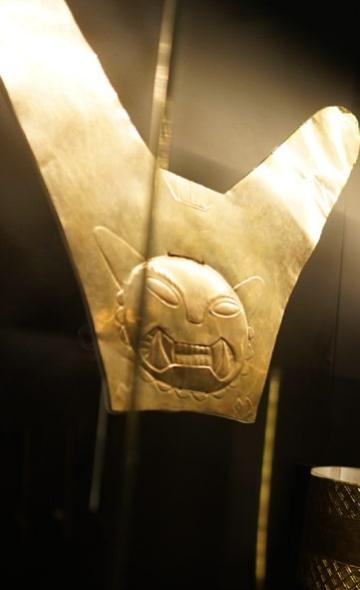
In the case of the Lady of Cao, her funerary bundle contained various metal ornaments that reveal the mastery of techniques such as embossing, openwork, gilding and deep drawing. The pieces were decorated with anthropomorphic and zoomorphic motifs that denote a connection with the Mochica worldview.
Learning about the techniques behind the Mochica Culture goldsmithing
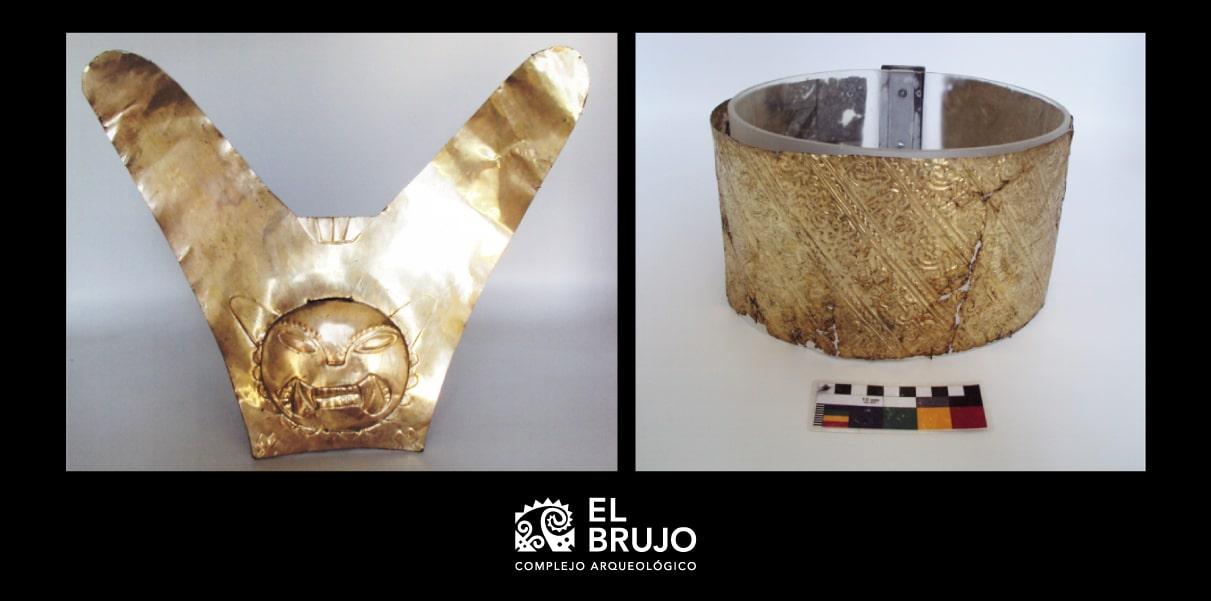
Among their most prominent techniques were hammering, the use of matrices, and chemical gilding, by which they coated copper objects with a thin layer of gold. They also employed metal alloys to obtain different shades and visual effects in the pieces.
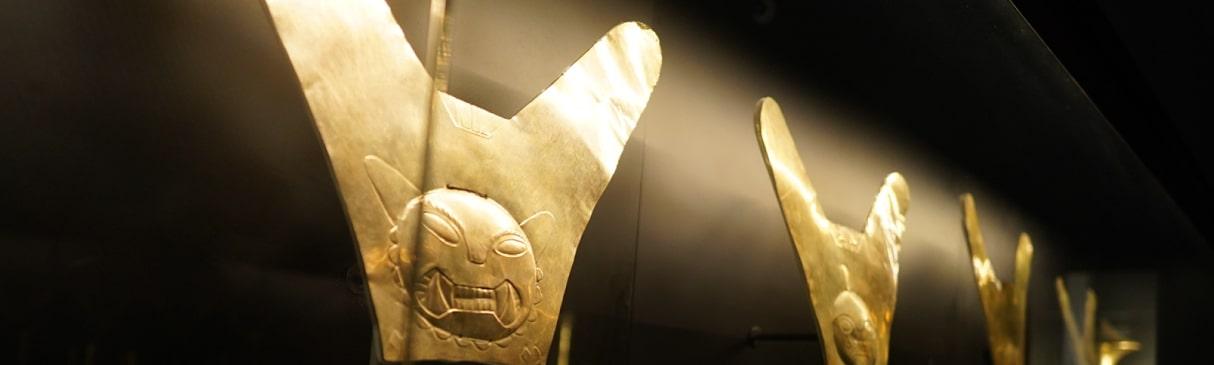
A notable example of their skill is the manufacture of diadems from gilded copper sheets. These pieces have a "V" shape, with rounded edges and ornamental details that reflect zoomorphic motifs. Their design and crafting demonstrate not only technical dexterity, but also knowledge of the properties of the materials used.
The ornaments of the Lady of Cao
The funerary trousseau of the Lady of Cao includes pieces such as diadems, crowns, nose rings and scepters. The nose rings, for example, combined anthropomorphic and zoomorphic figures using techniques such as embossing and openwork, achieving dynamic visual effects. As for the diadems, four of these were found in the funerary bundle, some of which show representations of felines, a recurring motif in the Mochica iconography. One of them has unique characteristics, such as the representation of an animal that could be a ferret, which suggests variations in the motifs and designs according to their function or symbolic meaning.
Innovation and legacy in Mochica goldsmithing
Beyond aesthetics, the techniques used by the Mochica in the manufacture of their pieces reflect an understanding of chemical and metallurgical processes. For example, electrochemical gilding, used to coat copper objects, demonstrates a high degree of technical innovation. It is estimated, thus far, that this process consisted in immersing the objects in a solution of dissolved gold, heating them to achieve a uniform and shiny finish.
Learn more about the Mochica culture
Would you like to admire the exquisite Mochica goldsmithing in person and discover the impressive metal ornaments of the Lady of Cao? Visit the El Brujo archaeological complex and its fascinating site museum. Find out how to get there by clicking here.
Students , outstanding news