- Visitors
- Researchers
- Students
- Community
- Information for the tourist
- Hours and fees
- How to get?
- Visitor Regulations
- Virtual tours
- Classic route
- Mystical route
- Specialized route
- Site museum
- Know the town
- Cultural Spaces
- Cao Museum
- Huaca Cao Viejo
- Huaca Prieta
- Huaca Cortada
- Ceremonial Well
- Walls
- Play at home
- Puzzle
- Trivia
- Memorize
- Crosswords
- Alphabet soup
- Crafts
- Pac-Man Moche
- Workshops and Inventory
- Micro-workshops
- Collections inventory
- News
- Researchers
- Cataloging at the El Brujo Archaeological Complex: How Heritage Documentation Enhances Public Access to Culture
News
CategoriesSelect the category you want to see:
Elite Moche Burial at Huaca Cao Viejo: The Principal Priest ...
Tumbas de élite mochica en Huaca Cao Viejo: la cámara decorada Moche Elite Tombs at Huaca Cao Viejo: The Decorated Chamb ...
To receive new news.
By: Rubén Buitron Picharde
Introduction: Why is documenting cultural heritage so important?
- Documenting archaeological assets is fundamental to caring for and managing our heritage. However, this task is often complicated due to fragmented registration systems and the fact that information is not always accessible to the public. Therefore, we ask ourselves: why invest resources in documenting heritage if citizens often cannot access that information?
- From the El Brujo Archaeological Complex, we want to share our experience, which began with the general inventory of collections between 2020 and 2022, and which advances today thanks to the “Comprehensive Museum Object Cataloging Project,” supported by the Federal Office of Culture of Switzerland. This experience invites us to understand that documenting is not just about conserving, but also about bringing heritage closer to people, promoting knowledge, and stimulating critical thinking.
Inventory and Cataloging: What is the difference?
- In heritage documentation, there are two levels of registration: inventory and cataloging.
Inventory
- This is a basic and dynamic record that answers two main questions: Does the piece exist? and Where is it? (Collections Trust, 2020). It includes a unique code, a brief description, and the physical location of the object.
- At El Brujo, we use the Digital Platform for the Management of Archaeological Collections (PDGCA), which integrates fieldwork information with data generated in the laboratory and storage. This improves organization, reduces data loss, and facilitates the work of the technical team.
Cataloging
- This is a more detailed and cumulative record that gathers as much information as possible about each object, from its physical characteristics and context to bibliographic references and its state of conservation (León, 2022; British Council, 2022).
- Our cataloging work includes two types:
- Parametric Cataloging: Designed for specific purposes, such as exhibitions or publications. For example, we have specialized catalogs on funeral bundles (Buitrón, 2023) and ceramics (Alva, 2024).
- Continuous Cataloging: A permanent process that gathers all documentation on an object over time, building a complete file or "catalogue raisonné" (Richter and Valdivieso, 2008).
Technical Processes of Cataloging: Key Details for Quality Work
- Cataloging is a task that requires a methodical and well-structured approach, supported by digital tools and a trained team. Based on our experience of more than five years at the El Brujo Archaeological Complex, these are the fundamental aspects to ensure a solid technical process:
Precise and Detailed Documentation
- Structured Description: Information is collected in two large blocks. First, a general overview of the object including type, morphology, and evidence of use. Second, a specific analysis of the decoration, detailing distribution, techniques used, and motifs present (Fundación Augusto N. Wiese, 2025). This separation helps organize information clearly and usefully for different purposes.
- Objective Evidence of Manufacture and Use: Marks, stains, and wear observable without introducing subjective interpretations are recorded. This practice protects scientific integrity and allows objects to be understood as material testimonies of social relationships, not merely isolated artifacts.
- Object Dimensionality: It is important to distinguish between two-dimensional objects (such as textiles or paintings) and three-dimensional ones (such as ceramics or tools), as this affects the technical recording methodology and the photographic techniques applied.
- Proper Selection of Digital Tools: We recommend using collaborative and flexible digital platforms capable of handling large volumes of data, featuring security protocols and information protection. This facilitates constant record updates and integration among multidisciplinary teams.
- Automation for Efficiency: Every documentation strategy must include tools that reduce time spent on repetitive tasks, such as the automatic generation of labels, reports on microclimatic conditions of objects, or the creation of conservation sheets. This allows more time to be dedicated to analysis and scientific evaluation.

Professional Photographic Record
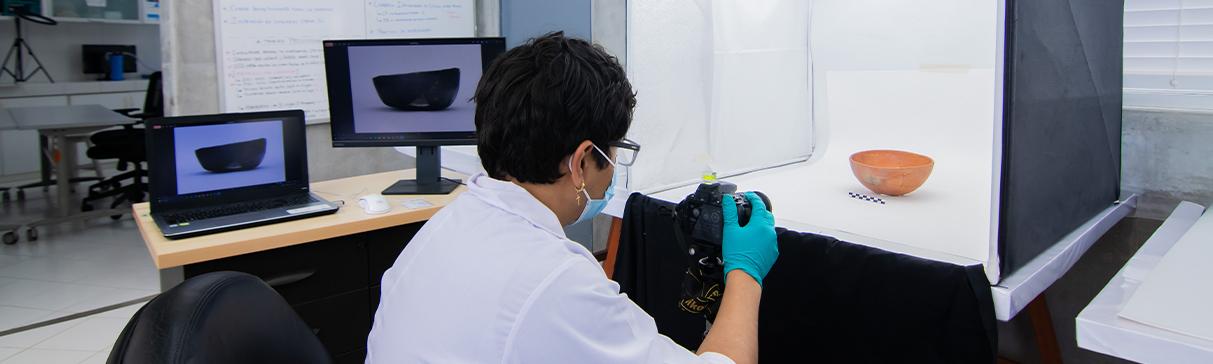
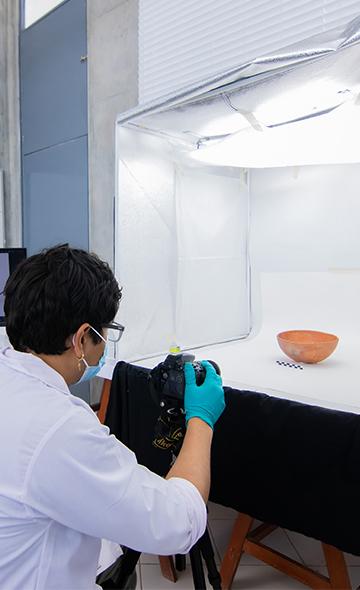
- Technical Specialization: Photography must be handled by professionals specialized in heritage documentation—archaeologists or photographers who understand the particularities of cultural heritage.
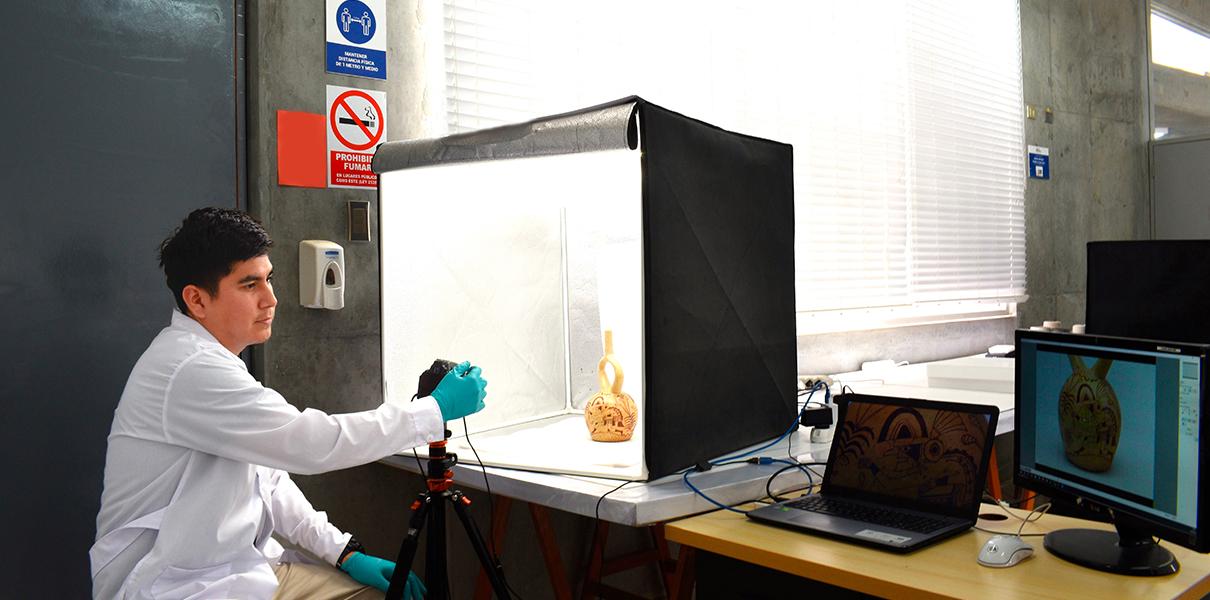
- Adequate and Varied Equipment: It is not just about high-resolution cameras, but also about having different lenses (macro, wide-angle), controlled professional lighting, and specialized editing software that guarantees quality and precision.
- Standardized Protocols: It is fundamental to define a manual that establishes technical criteria for each shot, camera settings, angles, and types of views necessary to reproduce the details of the objects with high fidelity.
- RAW Format and Standard Formats: Images should be saved in RAW for professional post-editing, but also in JPG or PNG for administrative and dissemination uses. This ensures versatility and quality in different contexts.
- Organized Storage and Backup Systems: It is recommended to implement a digital system that classifies images according to line of evidence, object code, and file type, with backup copies to prevent loss.
- This photographic record has not only technical value but also social value: the image must convey traces of manufacture, use, and maintenance, reminding us that each object has a human history, a natural environment, and social relationships. Thus, a more realistic and empathetic relationship with heritage is promoted.
Control and Review: Quality and Ethics in Documentation
- Communication and Collaboration: Work must be constant and team-based, where any technical difficulty is openly discussed to find joint solutions.
- Early Detection and Problem Resolution: Before validating data and authorizing its publication, it is imperative to identify errors or inconsistencies to correct them in time.
- Data Treatment: Images must be optimized (adequate compression), registration fields completed, and descriptions refined to guarantee integrity and utility.
- Feedback for Continuous Improvement: The review should also allow for technical adjustments in protocols, refinement of digital platforms, and updating of methodologies, based on the experience accumulated by the team.
- Ethical Care in Presentation: It is essential to evaluate what type of information is appropriate to show, especially when dealing with sensitive material such as human remains. Respect must be a priority, and exhibitions must always be justified and contextualized.
Institutional Benefits of Comprehensive and Quality Cataloging
- A well-executed cataloging process not only fulfills a documentary function but provides multiple concrete benefits for cultural institutions, especially museums and heritage centers:
- Incorporation of modern techniques to improve recording:
- The focus stacking technique, used at El Brujo (Palomino, 2025), allows for sharp images of irregular and textured surfaces, facilitating detailed analysis without risky manipulation.
- Photogrammetry and 3D models (Oliva, 2025) are powerful tools for creating digital replicas that reduce the need for physical manipulation, protecting original objects and allowing their dissemination on digital platforms or virtual exhibitions.
- An exhaustive examination of manufacture and use (Solórzano, 2025) helps highlight artisanal techniques and evidence of conservation, enriching the database and providing scientific and educational value.
- Improvement and optimization of internal processes: Systematic implementation of cataloging drives improvements in daily operational management. Preventive conservation, academic research, and the production of pedagogical or cultural content are strengthened, aligning the entire team with a coherent and professional vision.
- Strengthening the strategic value of the photographic record: High-quality images facilitate the creation of specialized materials for educational activities, exhibitions, publications, and scientific and cultural dissemination projects. These activities not only enrich public knowledge but can also generate income and additional resources that directly benefit the institution.
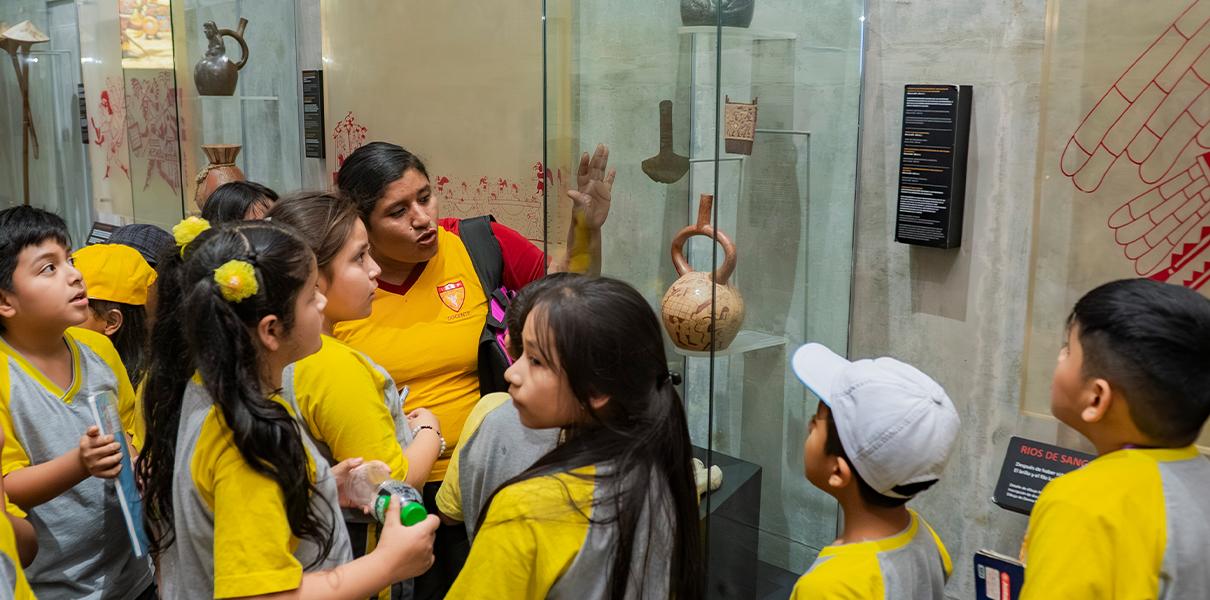
- Generation of social and cultural impact: Good cataloging not only improves institutional management but also connects with the community, sparks interest, and facilitates access to cultural heritage information, contributing to collective preservation and the strengthening of local and national identity.
Why do we catalog cultural heritage?
- Cataloging is not just a technical task; it is a commitment to protect, understand, and value our heritage. Although it is fundamental for conservation and research (ICOM, 2017), its true impact lies in making information accessible, clear, and useful for society.
- In Peru, there are gaps in public access to this information, so institutions must create inclusive and critical policies. Heritage is something living and social that changes over time (García Canclini, 1999; León, 2022). Therefore, its management must be open and connect with current challenges, avoiding exclusionary or outdated approaches.
- This note offers technical recommendations for museum professionals but also invites the fostering of citizen access, open dialogue, and critical thinking, which are especially vital in times of social polarization.
- We especially thank the financial support of the Federal Office of Culture of Switzerland, which allowed the cataloging of more than 4,375 archaeological pieces, now available for public consultation at www.elbrujo.pe/catalogo/ — an open resource for research and inspiration.
- Bibliographic References
Alva, J. (2024). La cerámica de El Brujo. Épocas Cupisnique y Mochica (A. Bazán, Ed.). Fundación Augusto N. Wiese.
British Council (Ed.). (2022). Estándares para la gestión de Colecciones. Una propuesta de los museos para los museos. Adaptación de Spectrum 5.0 al contexto del Perú.
Buitron, R. (2023). Fardos Lambayeque en El Brujo. Catálogo de la Colección (A. Bazán, Ed.). Fundación Augusto N. Wiese.
Collections Trust. (2020). Catalogación. https://collectionstrust.org.uk/wp-content/uploads/2020/12/ES-05-Cataloguing.pdf
Fundación Augusto N. Wiese. (2025). Lineamientos técnicos para la catalogación de las colecciones del CAEB.
García Canclini, N. (1999). Los usos sociales del Patrimonio Cultural. In E. Aguilar (Ed.), Patrimonio Etnológico. Nuevas perspectivas de estudio (Consejería de Cultura. Junta de Andalucía, pp. 16-33).
ICOM. (2017). ICOM Code of Ethics for Museums.
León, A. (2022). El Museo. Teoría, praxis y utopía (Ediciones Cátedra).
Oliva, L. (2025). Catalogación de cerámica de El Brujo. Complejo Arqueológico El Brujo. https://www.elbrujo.pe/blog/la-catalogacion-de-ceramica-en-el-brujo
Palomino, E. (2025). Soluciones técnicas para la documentación fotográfica de bienes culturales. Complejo Arqueológico El Brujo. https://www.elbrujo.pe/blog/soluciones-tecnicas-para-la-documentacion-fotografica-de-bienes-culturales
Richter, M., & Valdivieso, C. (2008). Los catálogos y el proceso de documentación de bienes culturales. In Manual de registro de bienes culturales (pp. 84-93). Centro de Documentación de Bienes Patrimoniales, DIBAM.
Solorzano, T. (2025). La catalogación de las colecciones de El Brujo: El registro fotográfico de botánicos trabajados. Complejo Arqueológico El Brujo. https://www.elbrujo.pe/blog/catalogacion-colecciones-de-el-brujo-registro-fotografico-de-botanicos-trabajados
Researchers , outstanding news