- Visitors
- Researchers
- Students
- Community
- Information for the tourist
- Hours and fees
- How to get?
- Visitor Regulations
- Virtual tours
- Classic route
- Mystical route
- Specialized route
- Site museum
- Know the town
- Cultural Spaces
- Cao Museum
- Huaca Cao Viejo
- Huaca Prieta
- Huaca Cortada
- Ceremonial Well
- Walls
- Play at home
- Puzzle
- Trivia
- Memorize
- Crosswords
- Alphabet soup
- Crafts
- Pac-Man Moche
- Workshops and Inventory
- Micro-workshops
- Collections inventory
- News
- Researchers
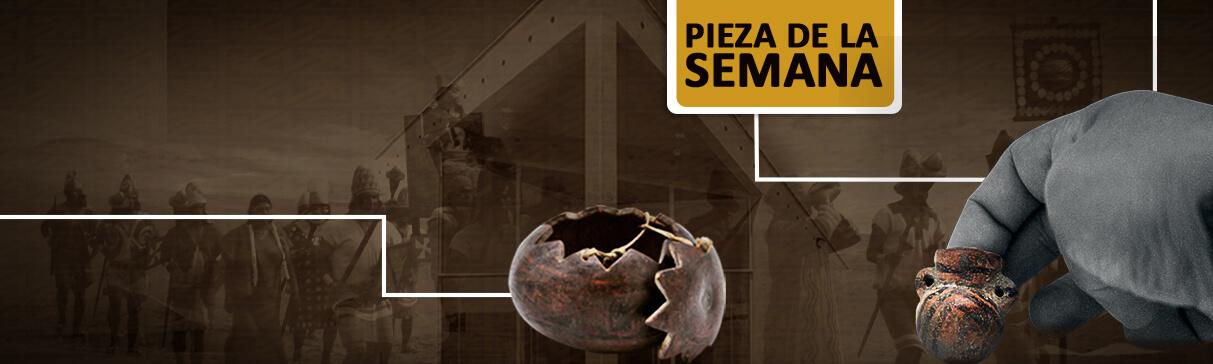
- Know about the collection that forms part of the "Piece of the Week", on our social media
News
CategoriesSelect the category you want to see:
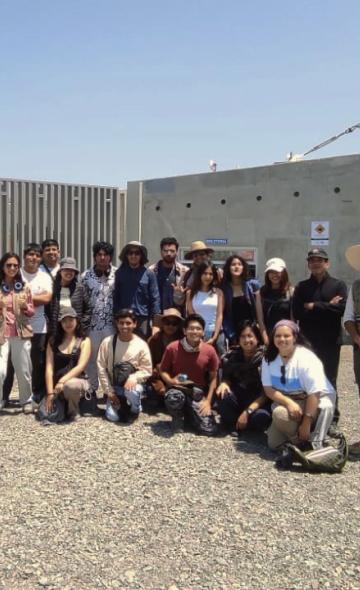
PUCP Archaeology Students Visit the El Brujo Archaeological Complex ...
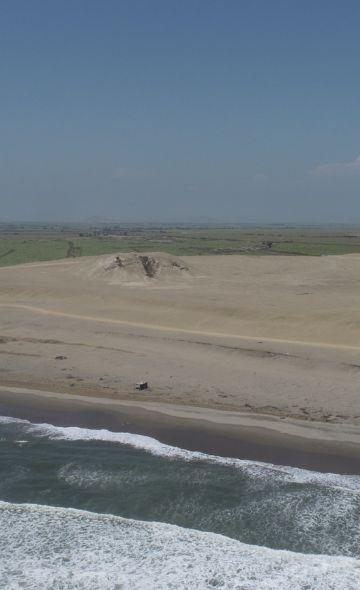
The Republican Settlements of El Brujo: Notes for the Recent History of Magdalena de Cao ...
To receive new news.
By:
In the warehouses of the El Brujo Archaeological Complex, there is a large quantity of archaeological pieces in a perfect state of conservation, which have not yet been exhibited in the Cao Museum. All of the pieces, which gather the findings from more than 30 years of research work inside the archaeological site, help us understand how the main cultural occupations were organized for the Moche, Lambayeque and Chimu, among others. Below, we summarize some of these archaeological jewels that belong to the Collection of the #PiezaDeLaSemana (PieceOfTheWeek), which you may also see on our digital channels:
Sewing basket: This sewing basket was found on the north façade of the Huaca Cao Viejo. Made from reed, it contains the spindles and cotton used for making fine threads.
Model of a temple: Model of a stepped temple or palace with a central ramp and made of coral rock, belonging to the Lambayeque culture (900-1200 AD).
Pitcher with the depiction of a personage: Pitcher with the depiction of a personage in a sitting position, holding in his hands a human head and an axe. This ceramic was found on the north façade of the Huaca Cao Viejo.
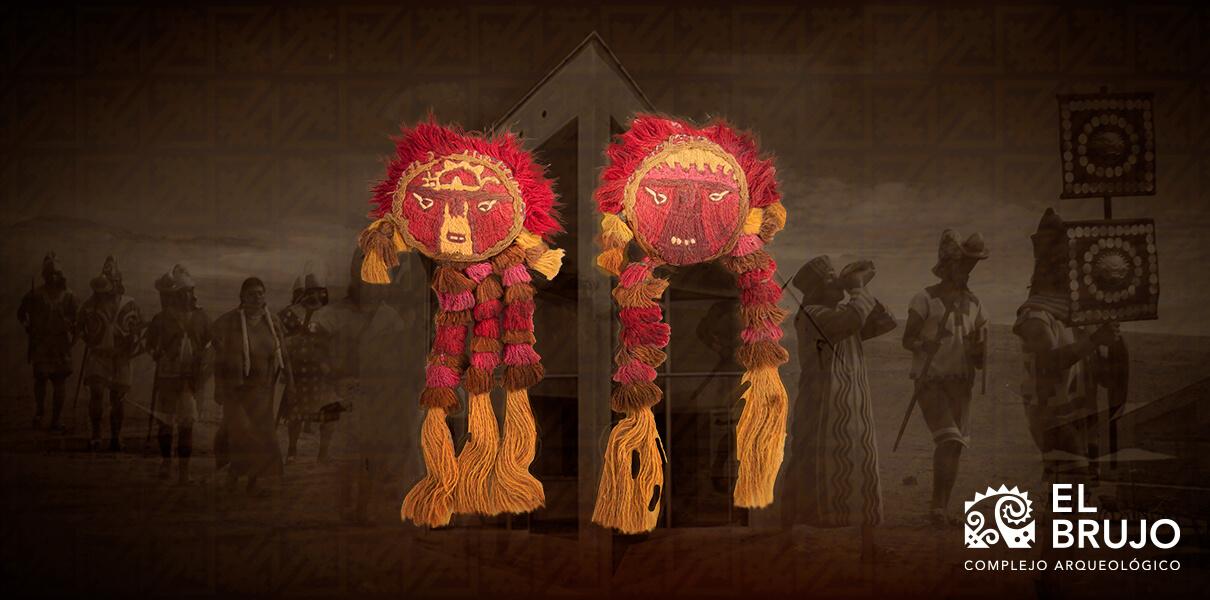
Wooden needle-holder: Decorated with stepped patterns and woven in wool. It was part of the offerings of a tomb, found on the north façade of the Huaca Cao.
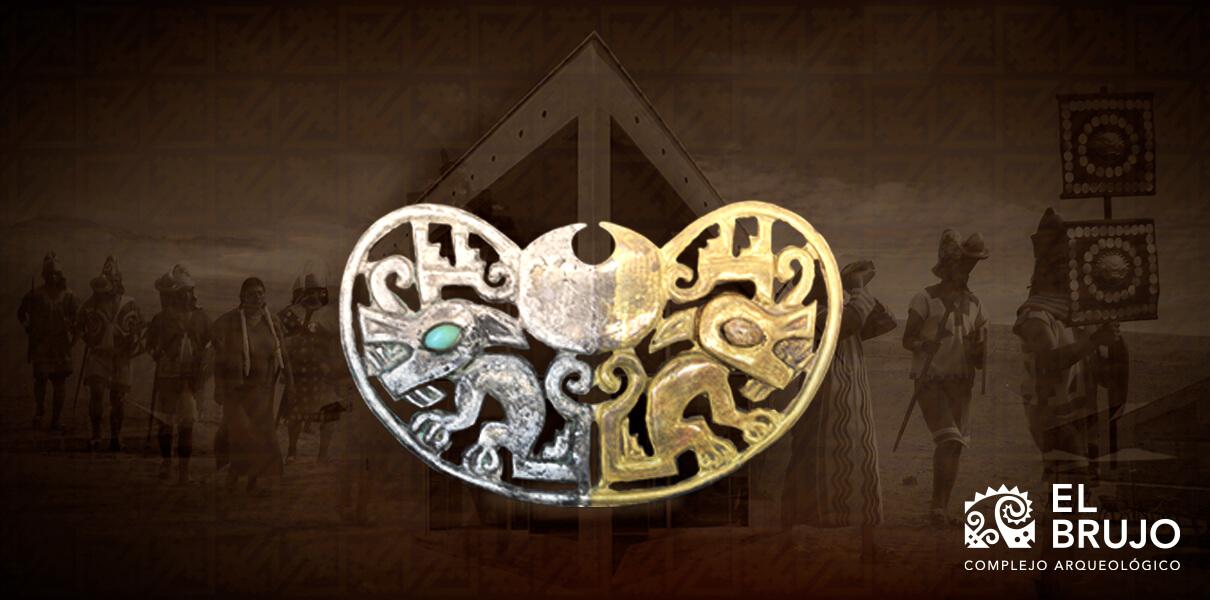
Gilded copper whistle with the depiction of a frog. It has embedded semiprecious stones in the eye-sockets. It was found on the upper platform of the Huaca Cao Viejo.
Sculpted bottle with the depiction of a monkey. The sculpted bottle shows the fangs and the tongue. It was found on the upper platform of the Huaca Cao Viejo and is currently part of the Cao Museum exhibit.
Wooden textile instrument with the depiction of a hand. The textile instrument was found on the upper platform of the Huaca Cao Viejo and it was part of the funerary paraphernalia of a Moche burial.
Pitcher with the depiction of a monkey. The pitcher made of black ceramic in the Chimu style has a molded depiction of a monkey holding a fruit. The design of the container contemplated a lateral hole that runs across the body of the pitcher.
Bottle with a handle and the depiction of a scene with warriors. The bottle's handle has a scene with warriors running through the desert. It was found inside the tomb next to other decorated bottles outside the main Plaza of the Huaca Cao Viejo.
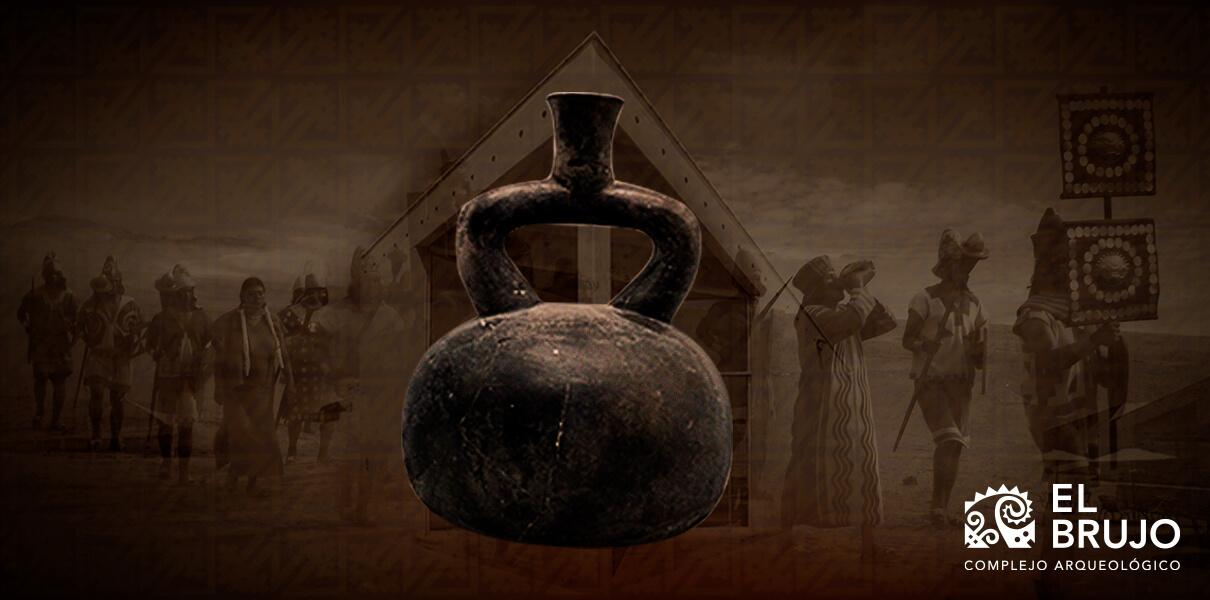
Pitcher made of black ceramic in the Chimu style. The pitcher made of black ceramic has the molded figure of a hairless dog and was found on the north façade of the Huaca Cao Viejo.
Ceramic spoon with the depiction of a bird. The ceramic spoon was found inside the tomb of a woman of the Moche elite, on the upper platform of Huaca Cao Viejo.
Wooden Moche sculpture with the depiction of a human fist: There is evidence that the wooden sculpture with the depiction of a human fist had inlays on the fingernails and on the entire hand. The remains of copper rivets on it would indicate that this piece belonged to a larger artifact and that it was designed with other types of materials.
Ceramic whistle with a molded decoration of a bird. The ceramic whistle with a molded decoration of a bird belongs to the Lambayeque culture and was found on the north façade of Huaca Cao Viejo.
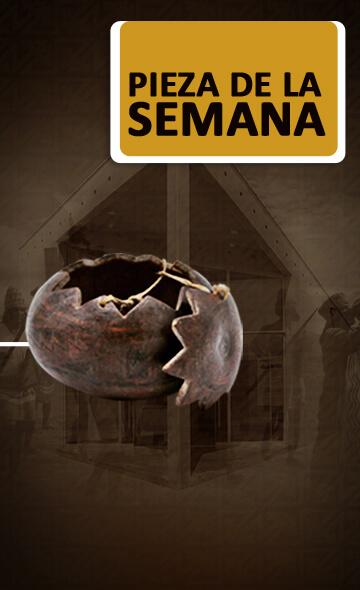
Gourd with a cap cut in the shape of a star. On the north façade of the Huaca Cao Viejo, a gourd (calabash) was discovered with a cap cut in the shape of a star. This piece belongs to the Lambayeque culture and it has depictions of birds and stepped designs.
Miniature ceramic pot. The miniature ceramic pot belongs to the Lambayeque culture and it has a geometric decoration. It was found on the north façade of the Huaca Cao Viejo and it is believed that it was part of the funerary paraphernalia of a post-Moche funerary bundle.
Wooden spoon with carved geometric decoration. The wooden spoon with carved geometric decoration belongs to the Lambayeque culture and it was found on the north façade of the Huaca Cao Viejo.
Black ceramic pitcher. The black ceramic pitcher was found south of the Huaca Cortada. The neck of the vessel represents the face of a human personage with braided hair, ear ornaments and a necklace.
A full spondylus shell tied with a textile. The full spondylus shell tied with a textile is a type of bivalve, coming from warm waters. It was an object of social prestige due to its use in rituals and it is part of the eight spondylus shells discovered at the Huaca Cao Viejo.
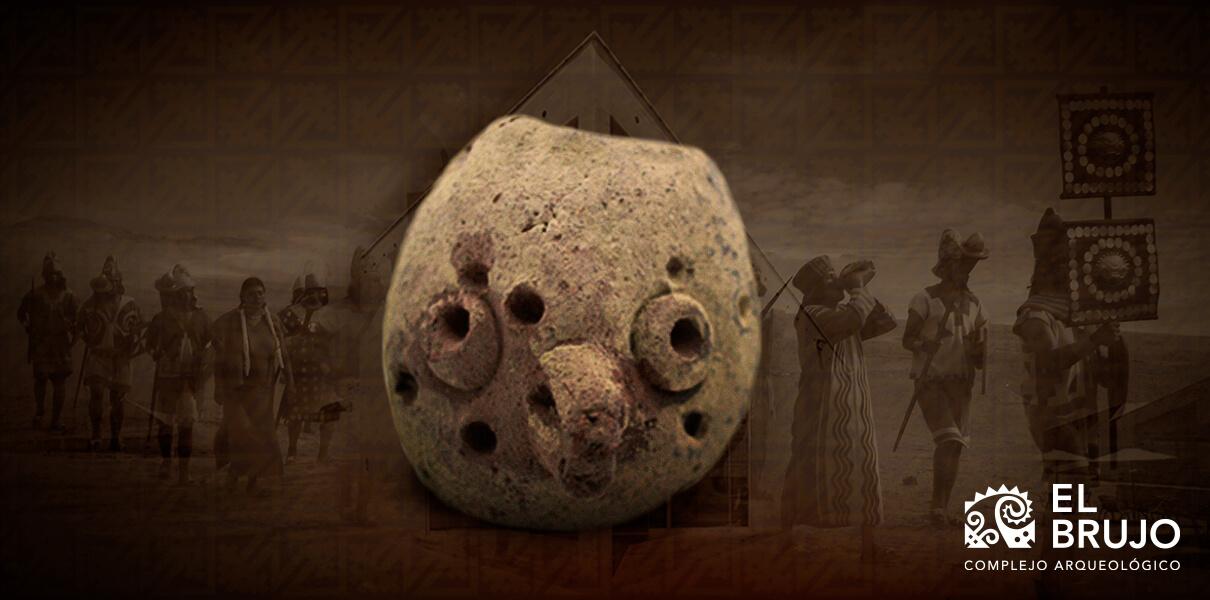
Ceramic ocarina with the molded decoration of a bird. It was discovered on the north façade of the Huaca Cao Viejo and it belongs to the Lambayeque culture (900-1200 NE).
Researchers , outstanding news