- Visitors
- Researchers
- Students
- Community
- Information for the tourist
- Hours and fees
- How to get?
- Visitor Regulations
- Virtual tours
- Classic route
- Mystical route
- Specialized route
- Site museum
- Know the town
- Cultural Spaces
- Cao Museum
- Huaca Cao Viejo
- Huaca Prieta
- Huaca Cortada
- Ceremonial Well
- Walls
- Play at home
- Puzzle
- Trivia
- Memorize
- Crosswords
- Alphabet soup
- Crafts
- Pac-Man Moche
- Workshops and Inventory
- Micro-workshops
- Collections inventory
- News
- Researchers
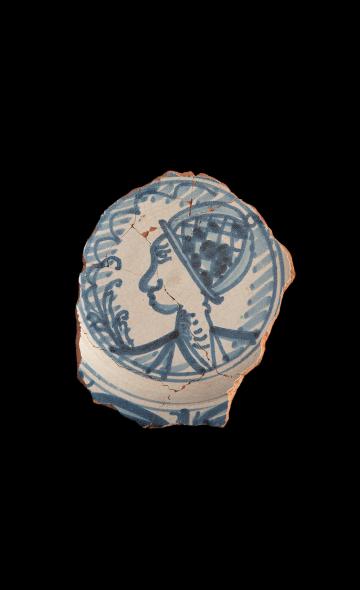
- Colonial Ceramics at El Brujo: Majolica, Porcelain, and Green Glazed Ware
News
CategoriesSelect the category you want to see:
Elite Moche Burial at Huaca Cao Viejo: The Principal Priest ...
Tumbas de élite mochica en Huaca Cao Viejo: la cámara decorada Moche Elite Tombs at Huaca Cao Viejo: The Decorated Chamb ...
To receive new news.

By: Yuriko Garcia Ortiz
Colonial ceramics in Peru represent a fascinating encounter between pre-Hispanic pottery traditions and the European techniques and influences introduced during the Spanish conquest and rule.
The use and consumption of tableware during the colonial period (1532 – 1821 CE) was diverse. On one hand, there was a set of domestic vessels intended for the storage, transport, fermentation, and cooking of food (jars, botijas or olive jars, plates, cups, pots, pitchers, large earthen jars, etc.); on the other, there were luxury vessels such as porcelain, majolica, and glazed wares. The spatial distribution and archaeological contexts of these objects demonstrate that these goods were rapidly introduced to the north coast, being best recorded in the cities founded by the Spanish.
The Colonial Sector at El Brujo
In the early years of Spanish rule, Viceroy Francisco de Toledo ordered the relocation of indigenous peoples into reducciones (resettlements) with the aim of preventing demographic dispersion, facilitating conversion to Christianity, and ensuring the collection of tributes.
The first indigenous town (pueblo de indios) of Magdalena de Cao was located near the mouth of the Chicama River at the sea. After the destruction caused by the El Niño phenomenon in 1578, the town settled on the esplanade of the Huaca Cao Viejo plaza, founding the reducción of Santa María Magdalena de Cao. The town followed the Hispanic grid plan (damero), consisting of a central plaza, a church, and streets with dwellings.
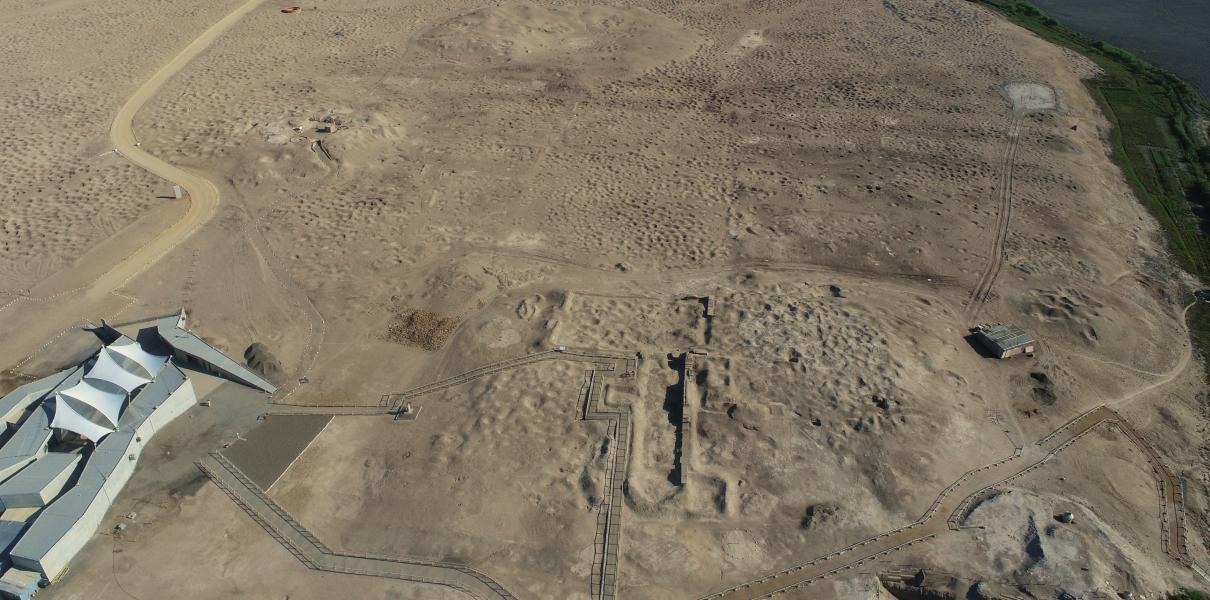
Figure 1. Aerial photo of the colonial sector at the El Brujo Archaeological Complex. CAEB Photographic Archive.
Panama Majolica at El Brujo: Production, Types, and Trade Routes
Following the conquest, the archaeological site of Panamá la Vieja became a hub for intercontinental transit and trade, as it was part of the colonies of the Viceroyalty of Peru. During the second half of the 16th century, it was home to pottery communities that produced large quantities of tableware for commercialization: majolica. These vessels were among the few local export manufactures that enjoyed high demand and commercial success (Mendizábal et al., 2024: 194).
Panama majolica received influence from Hispanic and Italian pottery traditions (Chiavazza et al., 2003). It is characterized by wheel-thrown manufacture and the use of reddish-brown clay. The pieces were glazed with tin and lead to give them a whitish color in a second firing, and they present a wide variety of types and decorations (Torres, 2011: 54-55).
The composition or pottery recipe of the Panama majolica found in the colonial sector of El Brujo is consistent with the minerals in the clays of the Panamá la Vieja region (VanValkenburgh 2020: 214), confirming the import and consumption of this tableware in Peru.
The majority of the sherds (tiestos) found in the colonial contexts of Magdalena de Cao at the CAEB correspond to the following types:
Panama Plain: Thick white enamel without decoration (Long, 1967).
Panama Blue on White: Tin-based with decoration painted in cobalt blue (Long, 1967).
Panama Polychrome A: Designs in shades of brown and black (obtained with manganese oxide), blue (cobalt), and/or green (copper) (Goggin, 1968).
Panama Polychrome B: Decoration in shades of light blue, light green, yellow, or orange (Deagan 1987).
The manufacture of these vessels in Panama meant a lower import cost compared to objects brought directly from the Iberian Peninsula. Furthermore, Spain prohibited trade between viceroyalties, which caused greater transit between the colonies that made up each viceroyalty (Skowronek 1992; Torres, 2011: 55-56).
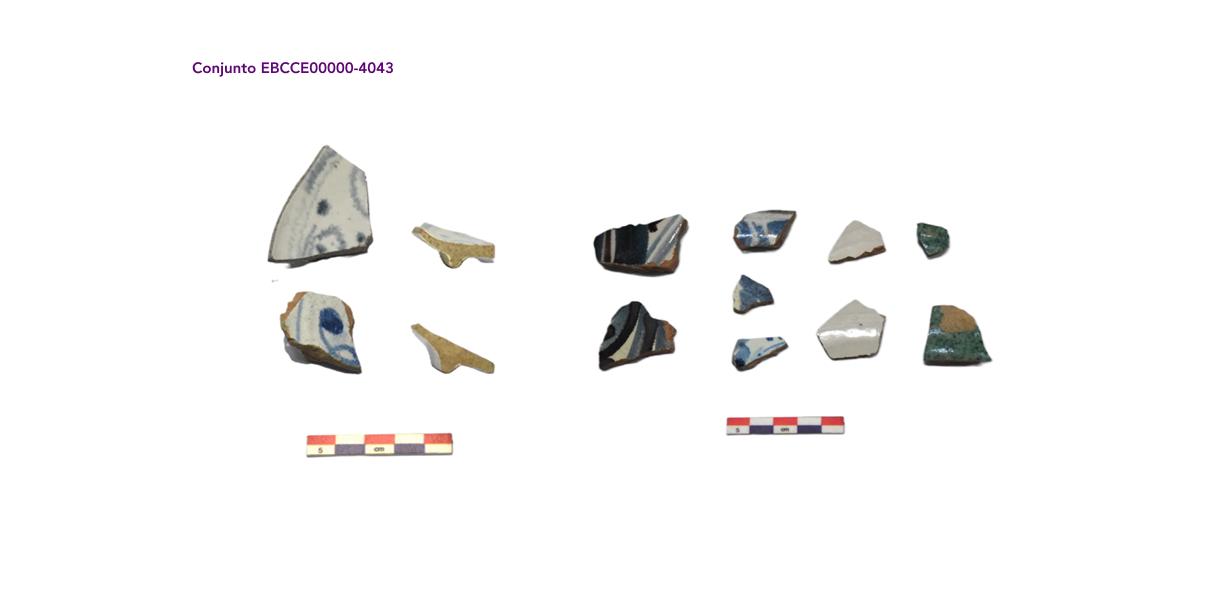
Figure 2. Panama Majolica from Magdalena de Cao, colonial sector of the CAEB.
Porcelain at El Brujo: From China to the Viceroyalty of Peru
Initially introduced and commercialized by the Portuguese during the first half of the 16th century, Chinese export porcelain—also known as Kraak porcelain—arrived in the Hispanic colonies with the Spanish conquest of the Philippines and the establishment of trade routes between Manila and Acapulco (VanValkenburgh, 2020: 215).
These vessels were created during the Han Dynasty (202 BCE - 220 CE) in China and had their greatest splendor in the Ming Dynasty (1368 - 1644 CE), with the expansion of trade during the reign of Emperor Wan-Li (1573-1614 CE). Unlike domestic porcelain for internal Chinese consumption, the Kraak style was produced in the imperial kilns of Jingdezhen (Jiangxi, China) exclusively for trade with Europe (Zeng, 2022: 168; Rosenfeld, 2008).
Porcelain is easily distinguished from other vessels by its white paste obtained from inclusion-free kaolinite, fired at high temperatures (Rice, 1987), and by its blue-on-white decoration with traditional motifs: bands on the rims, fauna (cranes, birds, and deer), and flora (Zeng, 2022: 170).
On the north coast of Peru, porcelain is recorded in domestic contexts of the reducciones in the Piura, Zaña, and Chamán valleys (VanValkenburgh, 2020: 215). In the indigenous town of Magdalena de Cao, in the Chicama Valley, porcelain played an active role in the establishment of social networks and trade.
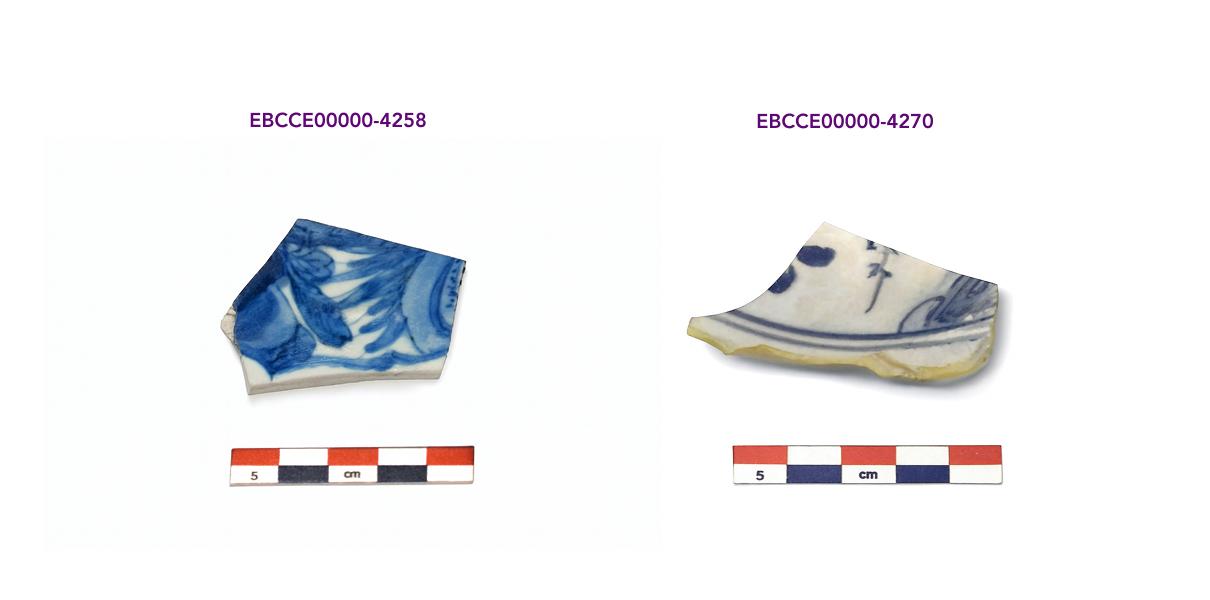
Figure 3. Porcelain from Magdalena de Cao, colonial sector of the CAEB.
Early Green Glazed Ceramics (EGG)
This type of vessel is a unique variety produced on the north coast of Peru during the 16th century (VanValkenburgh, 2020). These pieces had a pre-Hispanic form, but their surface was covered by a glass-like glaze in yellow or green tones, a result of impurities when glazing the vessels.
In the colonial sector of El Brujo, these assemblages were recorded in domestic contexts and middens (trash heaps) during the first decades of occupation at the site. Although a single recipe for the clay composition of these vessels was not determined, a wide difference in the composition of the sherds is documented compared to other valleys, such as Zaña (VanValkenburg et al., 2015).
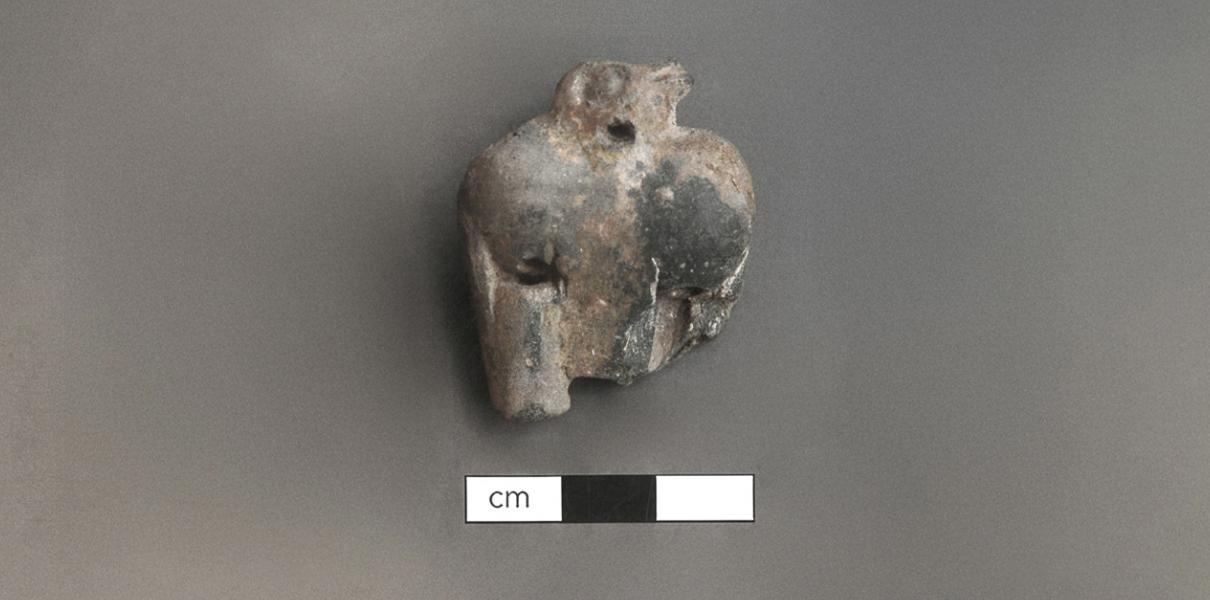
Figure 4. Fragment of Early Green Glazed sherd, found in Unit 28 of the Town sector (VanValkenburgh, 2020: 217).
Learn more about our collection! Access our online catalog and enjoy the exhibition of colonial pieces at the El Brujo Site Museum. We look forward to seeing you!
References
Chiavazza, H., Puebla, L., & Zorrilla, V. (2003). Estudios de los materiales cerámicos históricos procedentes del Área Fundacional de la Ciudad de Mendoza. Revista NAyA, 1-56.
Deagan, K. (1987). Colonies of Florida and the Caribbean: Vol. 1: Ceramics, Glassware and Beads. Smithsonian Institution Press.
Goggin, J. (1968). Spanish Majolica in the New World: Types of the Sixteenth to Eighteenth Centuries. New Haven: Yale University.
Long, G. (1967). Archaeological investigations at Panama la Vieja. [Unpublished Master's Thesis]. Department of Anthropology. Gainesville: University of Florida.
Mendizábal, T., Purcelot, J.-S., & Mojica, A. (2024). Los hornos cerámicos de Panamá Viejo. SPAL Revista de prehistoria y arqueología, 33.2, 193-224.
Rice, P. M. (with Internet Archive). (1987). Pottery analysis: A sourcebook. Chicago: University of Chicago Press.
Rosenfeld, L. (2008). La porcelana china kraak en Panamá: Documentación de una muestra arqueológica de los siglos dieciséis y diecisiete. Canto Rodado: Revista especializada en patrimonio, 3, 1-16.
Skowronek, R. K. (1992). Empire and Ceramics: The Changing Role of Illicit Trade in Spanish America. Historical Archaeology, 26(1), 109-118.
Torres, R. de M. (2012). Cerámica colonial en el valle bajo y medio de Zaña: Tecnología, formas y comercio [Licentiate Thesis, Pontificia Universidad Católica del Perú].
VanValkenburgh, P. (2020). Colonial Ceramics. Commerce and Consumption. In Magdalena de Cao: An Early Colonial Town on the North Coast of Peru (pp. 209-229). Peabody Museum Press.
Vanvalkenburgh, P., Kelloway, S., Dussubieux, L., Quilter, J., & Glascock, M. (2015). The Production and Circulation of Indigenous Lead-Glazed Ceramics in Northern Peru During Spanish Colonial Times. Journal of Archaeological Science, 61.
Zeng, T. (2022). La influencia de la porcelana china en los estilos artísticos de la cerámica española hasta el siglo XVIII [Doctoral Thesis, Universitat de Valencia].
Researchers , outstanding news