- Visitors
- Researchers
- Students
- Community
- Information for the tourist
- Hours and fees
- How to get?
- Visitor Regulations
- Virtual tours
- Classic route
- Mystical route
- Specialized route
- Site museum
- Know the town
- Cultural Spaces
- Cao Museum
- Huaca Cao Viejo
- Huaca Prieta
- Huaca Cortada
- Ceremonial Well
- Walls
- Play at home
- Puzzle
- Trivia
- Memorize
- Crosswords
- Alphabet soup
- Crafts
- Pac-Man Moche
- Workshops and Inventory
- Micro-workshops
- Collections inventory
- News
- Students
- What are the origins of Andean ceramics? The first finds of archaeological pieces in America
News
CategoriesSelect the category you want to see:
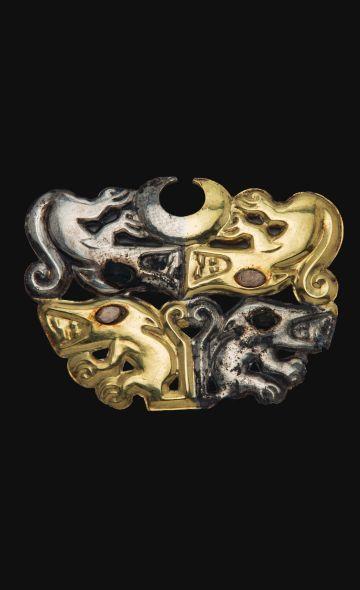
The 44 Nose Ornaments of the Lady of Cao at El Brujo (La Libertad, Peru): Emblems of Power and Moche Duality ...
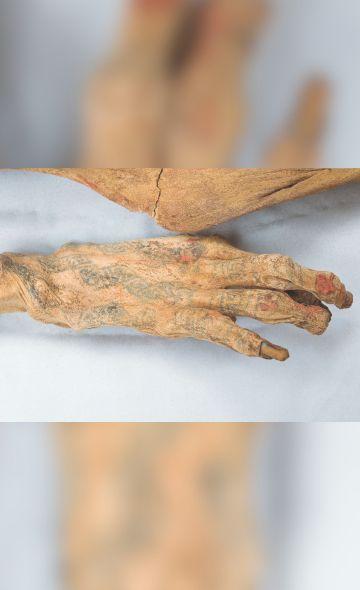
Cinnabar: The Mineral That Preserved the Lady of Cao? ...
To receive new news.
By: Complejo arqueológico El Brujo
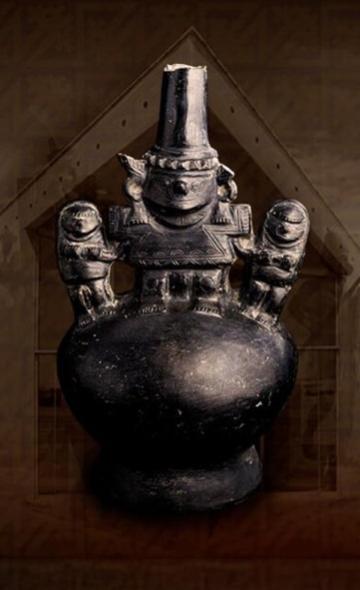
Andean ceramics have their roots in the social dynamics of the ancient human groups that inhabited the Andes, allowing the availability of a series of containers and objects that enhanced the economic and political processes of the region. This millennial legacy exposes the technical dexterity and creativity of pre-Columbian societies, while acting as a tangible record of their daily lives, beliefs, and social structures.
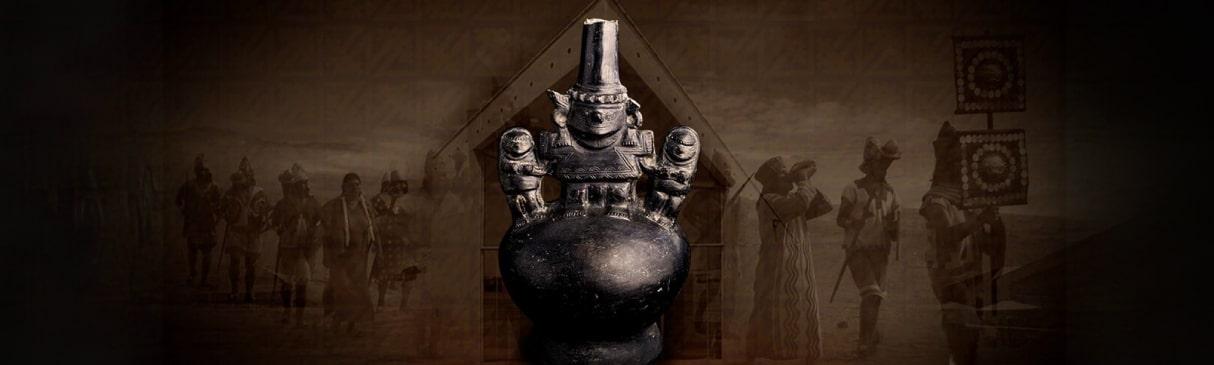
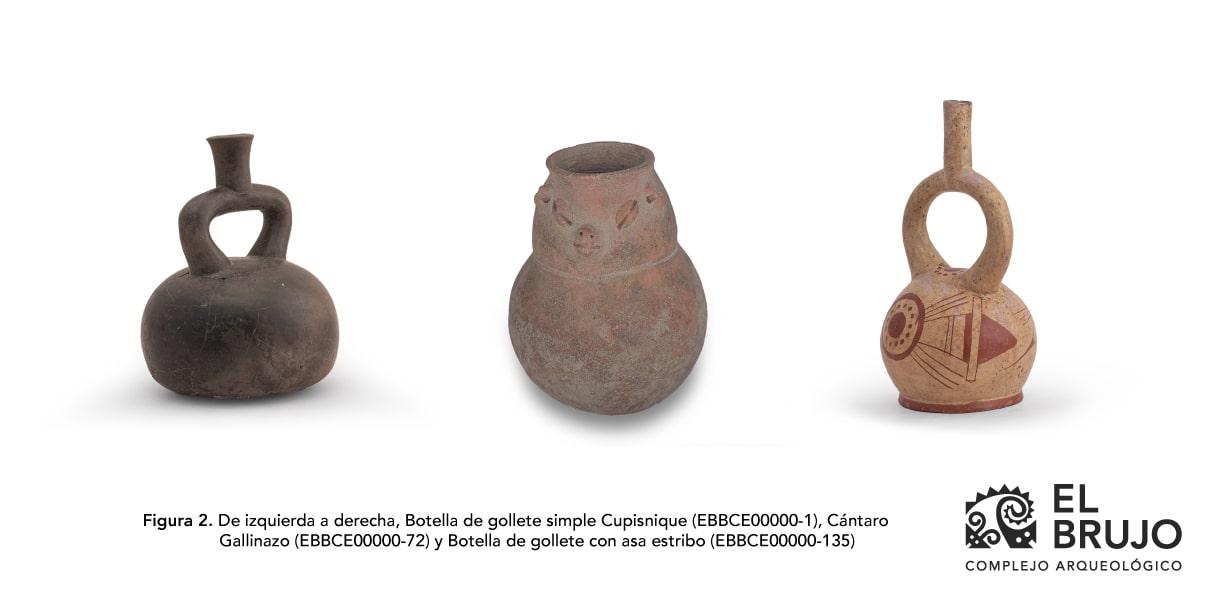
Evidence of the ancient productive traditions of archaeological ceramics in the region, such as those of the El Brujo archaeological complex, reveal fascinating details about the historical trajectories of this practice dating back to the Cupisnique and Mochica epochs. For example, the shape of the containers shows patterns of consumption, while the iconographies on the pieces provide information about communication systems and social structures.
Some of these pieces transcend their utilitarian function and become powerful vehicles of ideological reproduction, many of them captivating certain researchers who seek to describe the discourses of power of the past. Moreover, Andean ceramics are a window for understanding a complex universe of economic relations and political management, from the raw materials obtained (clays, pigments, etc.) to the social uses of clay objects.
Join us to discover the secrets of Andean ceramics, based on the revelations of the book The Ceramics of El Brujo: Cupisnique and Mochica epochs.
The First Vestiges of Pottery in America: A journey to the past
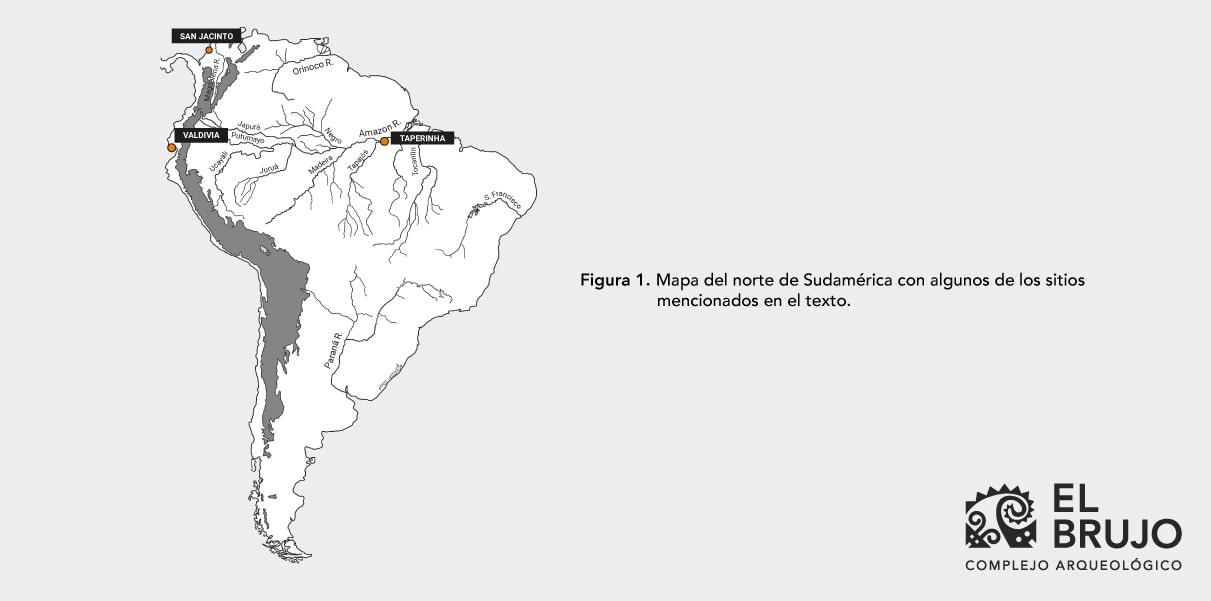
In northern South America, archaeologists have found the first evidence of pottery in the Americas, covering countries such as Brazil, Guyana, Venezuela, Colombia and Ecuador. One of the oldest discoveries corresponds to the culture called Taperinha, in the lower Amazon, where communities of fishermen and gatherers began to use pottery between 5,663 and 5,315 B.C.
Other relevant evidence was found in northeastern Colombia, in San Jacinto. Here, the oldest ceramics date from between 4,946 and 3,900 BC. These fragments are associated with temporary settlements where culinary activities and group rituals were carried out, including the use of underground ovens and the possible distribution of food in ceremonial contexts.
In the case of Ecuador, the Valdivia culture is a fundamental reference in the development of American ceramics. Originating around 3,800 B.C., this culture stood out with the production of vessels of various shapes and decorations, such as high-necked pots and hemispherical bowls, which evolved over eight identified stylistic phases. These advances reflect a bimodal economy based on agriculture and fishing, as well as a social complexity evidenced in their settlement patterns.
Ceramics arrive in the central Andes: How and when?
In the central Andes, mainly in Peru, pottery made its entry relatively late, between 1,700 and 1,500 B.C., thanks to the adaptation of knowledge from northern South America. This delay has puzzled researchers, as Andean societies already showed remarkable social complexity. Finds at sites such as Tutishcainyo (Ucayali) and Kotosh (Huánuco) show high-quality pottery, with sophisticated shapes that suggest a key cultural exchange from the Amazon, the northern sierra or the coast.
El Brujo and its ceramic legacy
The El Brujo archaeological complex is an extensive site located near the mouth of the Chicama River, on the northern coast of Peru, and the scene of 14,000 years of social history. To that extent, it houses evidence of both the first hunter-gatherer communities and the vestiges of a republican fishing village. In this long historical process, ceramics have been one of the most widely used material testimonies since their introduction in the central Andes around 1,700 B.C.
Find out more about Andean ceramics
If you want to delve deeper into the legacy of our cultures, we invite you to purchase the book The El Brujo Ceramics: Cupisnique and Mochica epochs. This work provides a detailed description of complete pottery pieces recovered from key archaeological contexts belonging to the Formative period (1,700 – 200 BC) and the Early Intermediate period (200 BC – 700 AD).
In order to systematize the material found —a fundamental part of the collections kept in the El Brujo Site Museum—, the book presents a chronological reading accompanied by abundant graphic detail, which allows us to better appreciate and understand this invaluable cultural legacy.
Students , outstanding news