- Visitors
- Researchers
- Students
- Community
- Information for the tourist
- Hours and fees
- How to get?
- Visitor Regulations
- Virtual tours
- Classic route
- Mystical route
- Specialized route
- Site museum
- Know the town
- Cultural Spaces
- Cao Museum
- Huaca Cao Viejo
- Huaca Prieta
- Huaca Cortada
- Ceremonial Well
- Walls
- Play at home
- Puzzle
- Trivia
- Memorize
- Crosswords
- Alphabet soup
- Crafts
- Pac-Man Moche
- Workshops and Inventory
- Micro-workshops
- Collections inventory
- News
- Students
- The Tattoos of the Lady of Cao as a Mark of Elite Status: Moche Visual Language
News
CategoriesSelect the category you want to see:
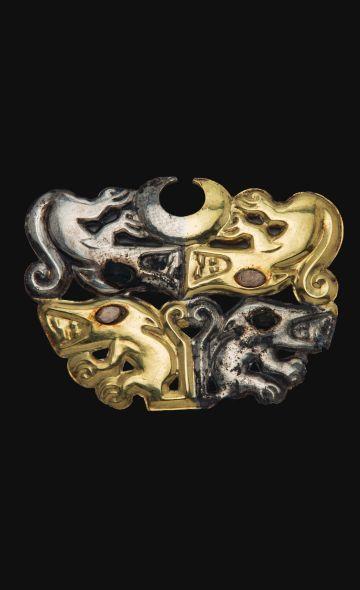
The 44 Nose Ornaments of the Lady of Cao at El Brujo (La Libertad, Peru): Emblems of Power and Moche Duality ...
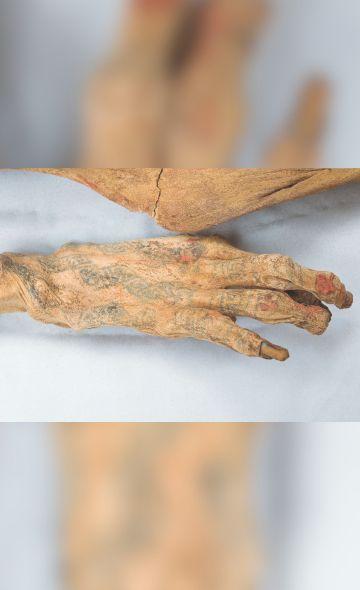
Cinnabar: The Mineral That Preserved the Lady of Cao? ...
To receive new news.
By: Complejo arqueológico El Brujo
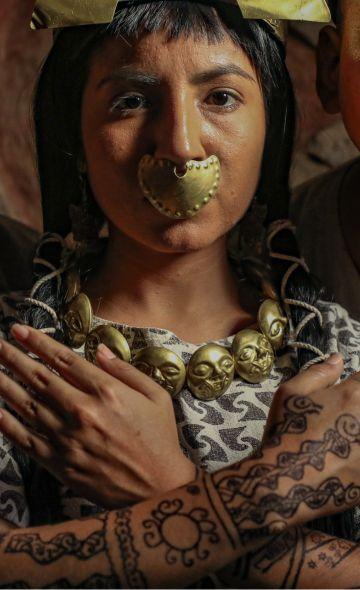
A member of the Moche elite, the Lady of Cao was buried at Huaca Cao Viejo, within the El Brujo Archaeological Complex, at an estimated age of 25 to 30 years.
Her discovery provided an important source for the study of Moche social practices. This analysis focuses on the tattoos discovered on her limbs as one of the most significant elements associated with her social status.
The Tattoos of the Lady of Cao in an Archaeological Context
The mortuary complex of the Lady of Cao and her companions was discovered in the northwestern enclosure of Huaca Cao Viejo, associated with its second construction phase, dated to around the 6th century AD.
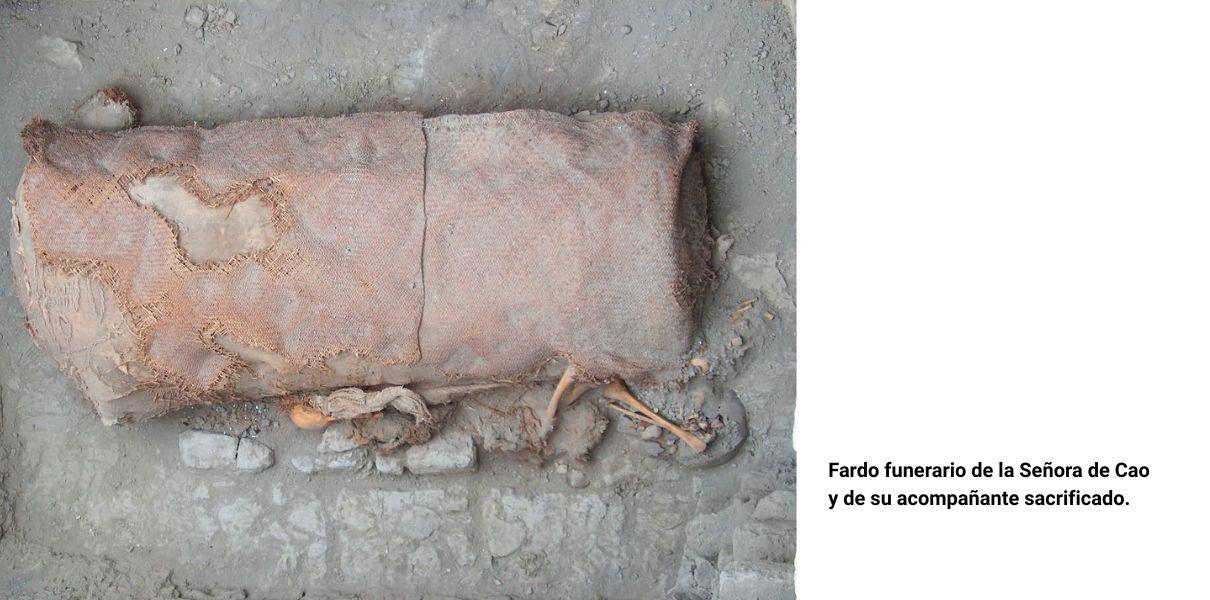
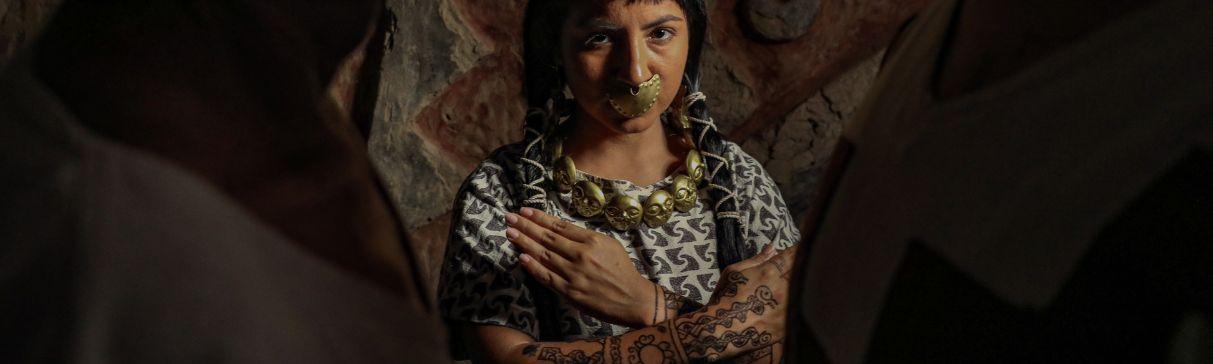
Following the excavation and opening of the funerary bundle, the Lady's body was found in an extended position, revealing tattoos on both hands, arms, ankles, and feet.
The location of these figures on the limbs suggests that they would have been visible with the garments worn by members of the elite.
Where are the tattoos located?
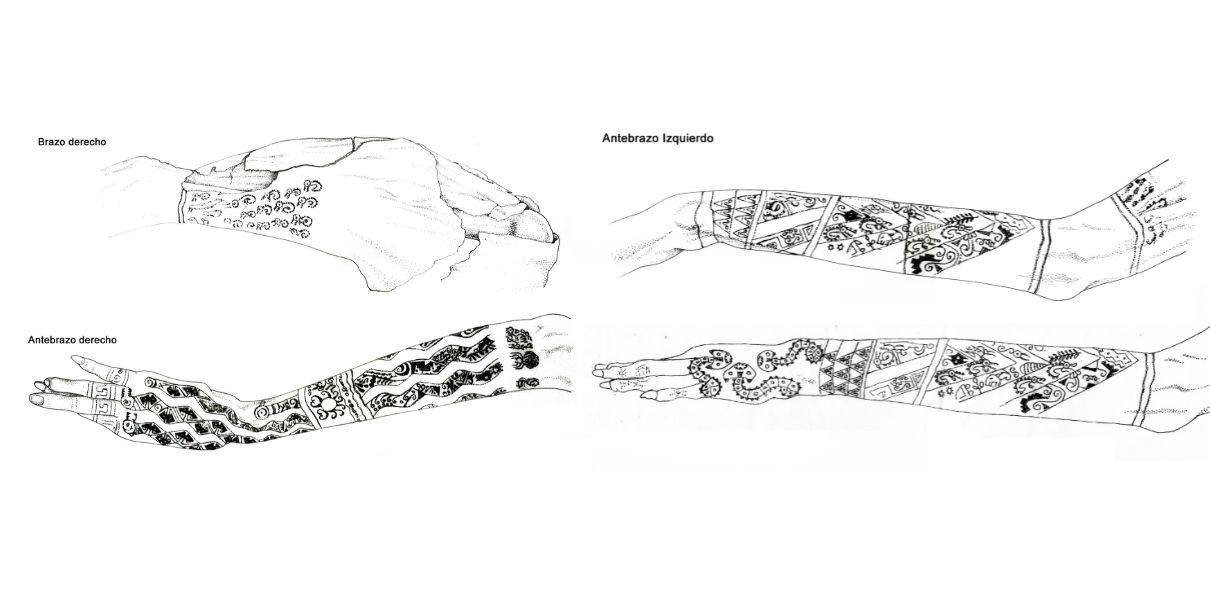
The tattoos were identified on:
- Both hands
- Arms
- Ankles
- Feet
Their distribution across the limbs is notable for their visibility and their association with elite clothing.
What Was the Source of the Color of the Tattoos?
Microchemical studies identified the blackish-blue pigment of the tattoos as ferrous oxide, or iron oxide.
The presence of this element was confirmed in the tattooed areas, while its absence in non-tattooed areas reinforces the conclusion that it was a component of the pigment.
It has been proposed that the source of the iron oxide came from the unripe fruits of jagua (Genipa americana L. ), a tree native to tropical forests.
What Images Do the Tattoos Depict?
The tattoos of the Lady of Cao feature a variety of zoomorphic, phytomorphic, and geometric figures.
Zoomorphic Figures
Stylized snakes predominate, particularly on the hands and forearms.
These figures frequently appear interspersed with stingray designs.
Images of the moon animal can also be found on the arms.
Other identified motifs include:
- Octopus
- Snail
Phytomorphic and Geometric Figures
Tree or branch silhouettes can also be observed, as well as the stepped-fret motif with waves. On the feet, the tattoos are simpler and include diamonds with a central dot, forming a reticulated pattern across the instep. These designs depicted on the body are the same as those found in the mural decoration of the northwestern enclosure and Huaca Cao Viejo.
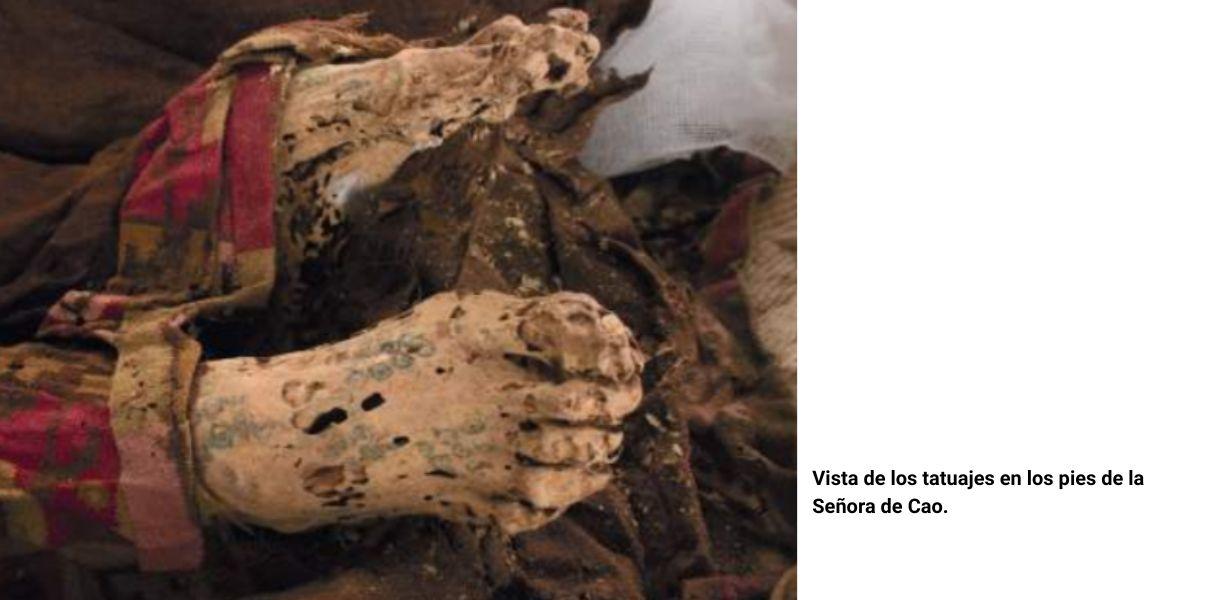
This indicates a strong connection between the tattoos and the iconographic repertoire of this monumental Moche building.
In Summary: Tattoos as a Visual Language of the Elite
Tattoos in Moche society were used as a distinctive mark, possibly reserved for individuals of high social rank.
Furthermore, the iconography represented in these tattoos is connected to the murals found at Huaca Cao Viejo and to ceramic and metal objects.
This suggests a deep connection between certain elite individuals and Moche ideological and power-related narratives.
In this way, tattoos constituted a permanent visual language used by ruling classes in both everyday and ceremonial activities.
Visit the El Brujo Site Museum and discover the tattoos of the Lady of Cao in Room 6.
Students , outstanding news