- Visitors
- Researchers
- Students
- Community
- Information for the tourist
- Hours and fees
- How to get?
- Visitor Regulations
- Virtual tours
- Classic route
- Mystical route
- Specialized route
- Site museum
- Know the town
- Cultural Spaces
- Cao Museum
- Huaca Cao Viejo
- Huaca Prieta
- Huaca Cortada
- Ceremonial Well
- Walls
- Play at home
- Puzzle
- Trivia
- Memorize
- Crosswords
- Alphabet soup
- Crafts
- Pac-Man Moche
- Workshops and Inventory
- Micro-workshops
- Collections inventory
- News
- Students
- What you should know about Huaca Cortada, one of the main Mochica monumental edifices
News
CategoriesSelect the category you want to see:
The 44 Nose Ornaments of the Lady of Cao at El Brujo (La Libertad, Peru): Emblems of Power and Moche Duality ...
Cinnabar: The Mineral That Preserved the Lady of Cao? ...
To receive new news.
By: Complejo arqueológico El Brujo
Huaca Cortada, an archaeological jewel of El Brujo in La Libertad, is much more than a Mochica construction: it is a living testimony to its history and complexity. Thanks to the archaeological interventions led by the Wiese Foundation, fascinating details have been revealed, such as the Mochica-style polychrome friezes recorded at the beginning of the twentieth century that adorn the walls of this huaca. These depictions, which include Peruvian catfish in diagonal designs, reflect the earliest phases of its construction, similar to those of the ceremonial enclosure of the Lady of Cao.
Furthermore, evidence suggests that Huaca Cortada and Huaca Cao Viejo, contemporary in their time, played complementary roles in political, religious, and economic activities during the Mochica epoch.
What is Huaca Cortada?
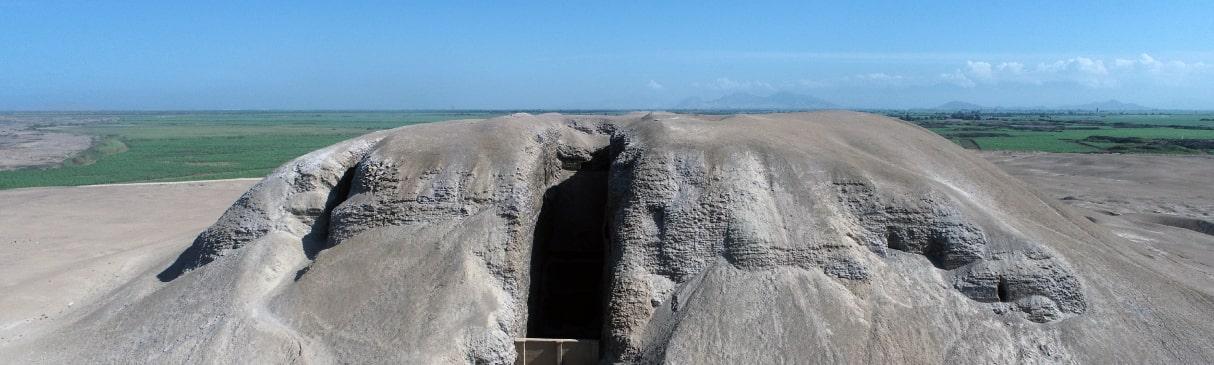
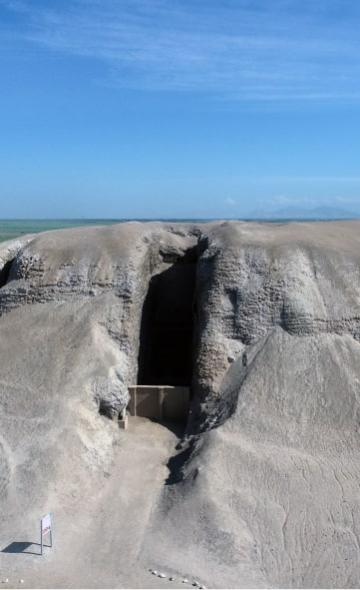
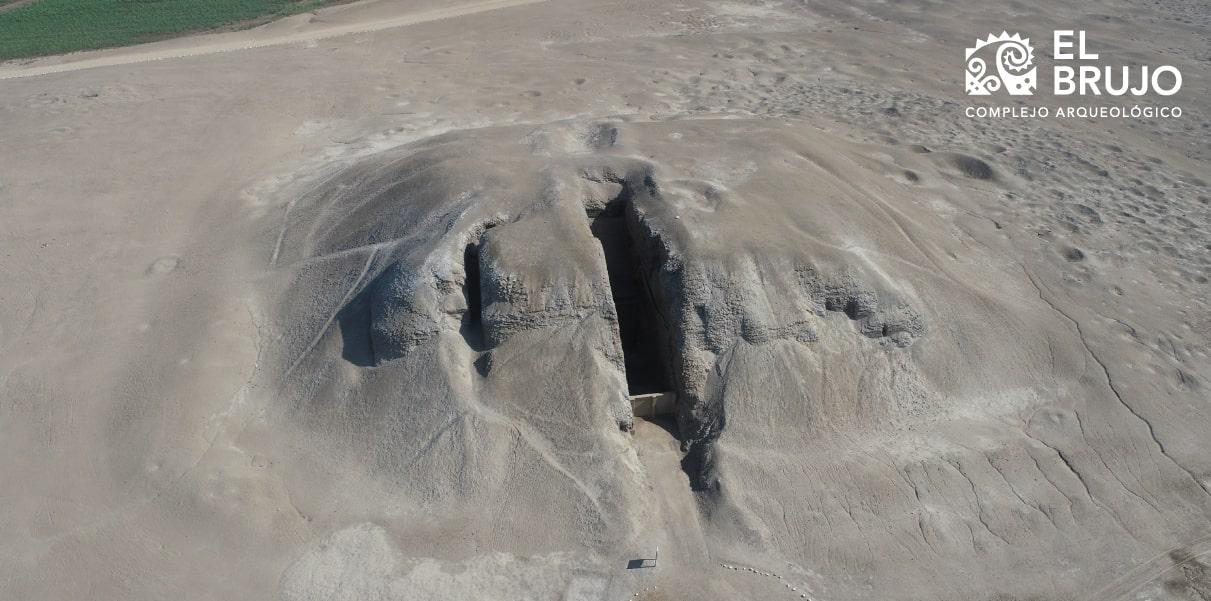
Huaca Cortada is one of the three main structures that make up the El Brujo archaeological complex, together with Huaca Prieta and Huaca Cao Viejo. Huaca Cortada is approximately 100 x 100 meters in dimension and 17 meters in height, and is known for the two gigantic gashes or cuts that can be seen on the south façade, which reach the core of the edifice, carved more than a century ago. Although these cuts affect its original appearance, they have also allowed researchers to study its internal construction.
The discovery of Huaca Cortada
The oldest record of Huaca Cortada comes from Antonio Raimondi, who visited the Chicama valley in 1868. At that time, it was known as Huaca Redonda, due to the slopes that covered its entire contour. However, the characteristic cuts of its south façade were not mentioned, which suggests that they were made later on. This change of name to Huaca Cortada reflects its current state described with two visible cuts on its south façade.
Historical significance and conservation
Huacas, in the Andean worldview, are attributed a sacred nature that can manifest themselves as mountains, lagoons or architectural structures. For the Mochica, these structures were scenes of rituals and ceremonies, and they reinforced the narrative of power adopted and developed by the Mochica aristocracies. Huaca Cortada is no exception, as it was part of the political and religious structure of its time.
The conservation of this site is essential to preserve our historical legacy. The CAEB (El Brujo Archaeological Complex) specialists have carried out archaeological interventions that allow us to better understand its construction history and protect it from the effects of time. These initiatives seek to keep alive the connection between history and the present time, while promoting responsible tourism.
How to visit Huaca Cortada?
The El Brujo archaeological complex is an ideal destination for those who want to explore Peru's historical and cultural richness. Apart from Huaca Cortada, you can visit Huaca Cao Viejo, Huaca Prieta and a Site Museum that houses archaeological pieces and remains associated with the 14 thousand years of uninterrupted occupation recorded in this archaeological site.
Recommended route to visit Huaca Cortada
Visiting Huaca Cortada is a unique experience that combines history, culture and amazement. To enjoy it, we recommend that you choose the Specialized Route, designed to connect tourists with the past while promoting the conservation of our heritage.
This route is aimed at those who wish to delve deep into culture and archaeology, including visits to the most important sectors of the El Brujo archaeological complex: the ancient Huaca Prieta, the Paredones (Standing Walls) and the monumental Huaca Cortada.
So, if you are looking for a trip that includes history, culture and adventure, the El Brujo archaeological complex is a must-see destination. To find out how to get there, click here.
Students , outstanding news