- Visitors
- Researchers
- Students
- Community
- Information for the tourist
- Hours and fees
- How to get?
- Visitor Regulations
- Virtual tours
- Classic route
- Mystical route
- Specialized route
- Site museum
- Know the town
- Cultural Spaces
- Cao Museum
- Huaca Cao Viejo
- Huaca Prieta
- Huaca Cortada
- Ceremonial Well
- Walls
- Play at home
- Puzzle
- Trivia
- Memorize
- Crosswords
- Alphabet soup
- Crafts
- Pac-Man Moche
- Workshops and Inventory
- Micro-workshops
- Collections inventory
- News
- Community
- Interview with Ulla Holmquist, former Minister of Culture during her participation in the V Archeology Colloquium
News
CategoriesSelect the category you want to see:
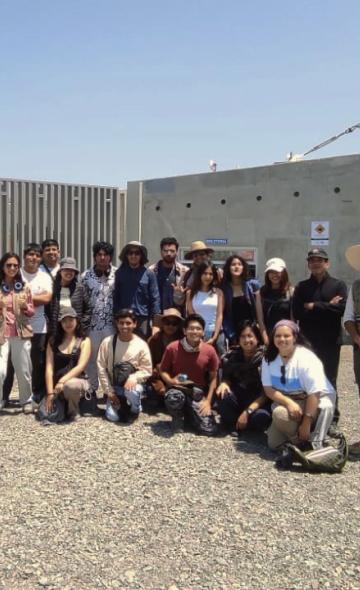
PUCP Archaeology Students Visit the El Brujo Archaeological Complex ...
The Republican Settlements of El Brujo: Notes for the Recent History of Magdalena de Cao ...
To receive new news.
By:
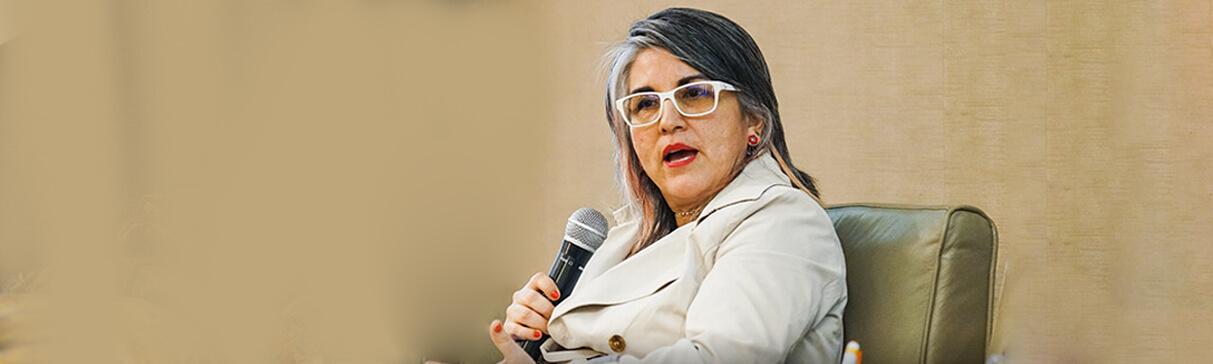
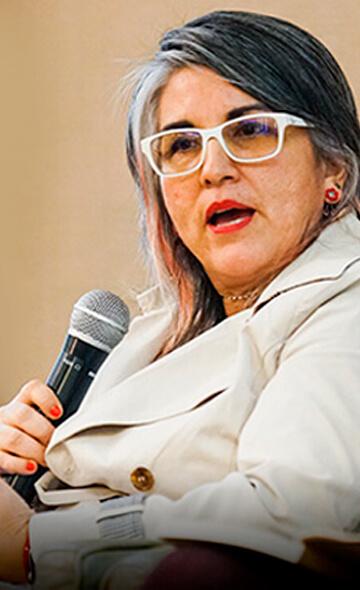
The last 5th International Archeology Colloquium, organized by the Wiese Foundation, was attended by Ulla Holmquist: an archaeologist from the Pontifical Catholic University of Peru and a Master's degree in Museology from the University of New York. She was Minister of State in the Culture portfolio, director of the Larco Museum, as well as a university professor and lecturer on topics related to museology, museum pedagogy, archeology and pre-Columbian art.
She agreed to talk with us about the current situation of archaeological collections in our country and the measures that need to be used to improve said management:
What is your opinion on the systematic looting to which the historical heritage has been subjected over the years?
I believe in the importance of raising awareness about the need for protection of archaeological heritage by all citizens, this awareness that has to start from the fact that recognition is significant for life. It cannot be an empty discourse, we have to start from the practices and programming and efforts that those of us in cultural management make to involve the population and work with them.
Of the recommended policies and strategies, which do you think would be the most viable for collections management?
In the management of collections it must be clear that in current times, it has more technical aspects that concern security and accessibility, it is also necessary to indicate the objectives for which it is carried out, if we stay in the methodological and systematic part it means that we are not considering a totality of what is a collection management policy.
What contributions do you think archaeological collections provide to citizens and social development?
The main contribution consists of the possibility of having information generated by the research, although this should not only be archaeological. I believe that collections do not exist to be studied solely by archeology, although the archaeological discipline has a series of tools and methodologies that allow us to study these collections, we cannot believe that archaeologists are the only owners of this object of study. It has to be much more open to the possibility of being studied, looked at, talked about, from a multidisciplinary and interdisciplinary approach.
What are the challenges facing archaeological collections in our country?
Uff, multiple. I think the challenges are to understand that the archaeological discipline itself has an important role but it is not the only one, you have to stop having such a high ego. This has a lot to do with the involvement of other perspectives, with the democratization of the discipline, with new approaches to gender. Archeology has to be looked at again. I always say that archeology has to heal itself a bit because the discipline changes over time.
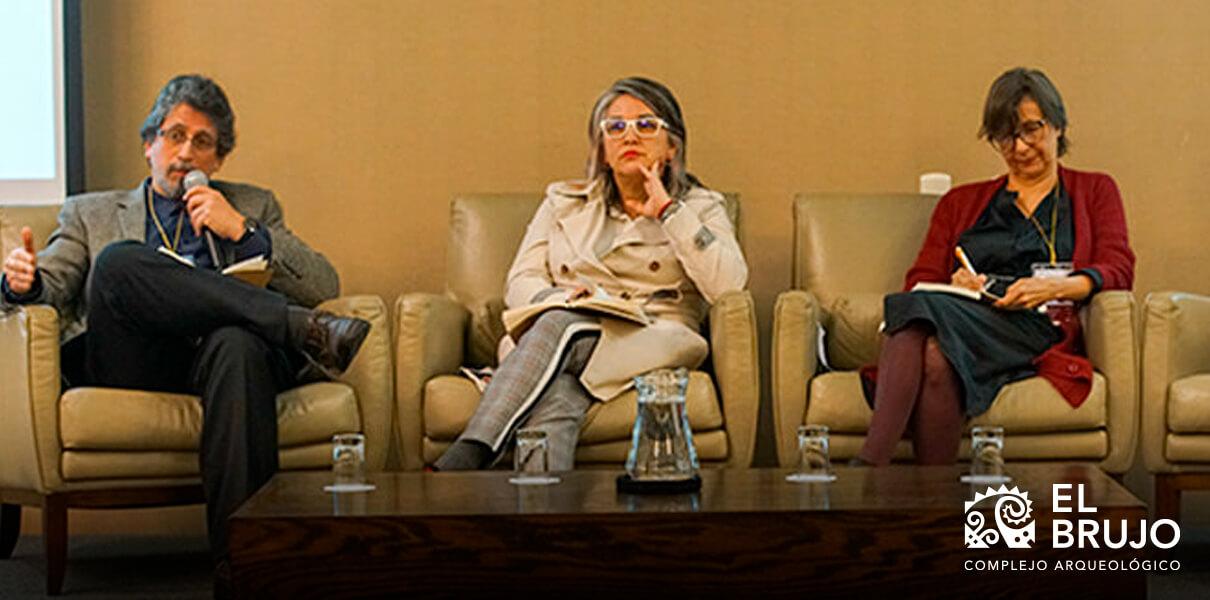
What do you rescue from your participation in the V Colloquium and from the professionals with whom you shared the table?
Spaces like these have to be replicated in all the various macro-regions of Peru because what happens with the management of archaeological resources is different. We cannot homogenize and think that all cases are the same. For example, a site museum on the coast is very different from a site museum in a place deep within a small community in the mountains, the accessibility is different. I have been convinced over time that there is no formula for managing archaeological sites, that there are different formats and that you have to learn from the experiences that have borne fruit and that have had good results.
This is how Ulla Holmquist explains to us the importance of managing archaeological collections, from a multidisciplinary and interdisciplinary approach, highlighting the importance of raising awareness about the need for protection of archaeological heritage by all citizens.
Community , outstanding news