- Visitors
- Researchers
- Students
- Community
- Information for the tourist
- Hours and fees
- How to get?
- Visitor Regulations
- Virtual tours
- Classic route
- Mystical route
- Specialized route
- Site museum
- Know the town
- Cultural Spaces
- Cao Museum
- Huaca Cao Viejo
- Huaca Prieta
- Huaca Cortada
- Ceremonial Well
- Walls
- Play at home
- Puzzle
- Trivia
- Memorize
- Crosswords
- Alphabet soup
- Crafts
- Pac-Man Moche
- Workshops and Inventory
- Micro-workshops
- Collections inventory
- News
- Students
- Tumbas de élite mochica en Huaca Cao Viejo: la cámara decorada Moche Elite Tombs at Huaca Cao Viejo: The Decorated Chamber
News
CategoriesSelect the category you want to see:
Elite Moche Burial at Huaca Cao Viejo: The Principal Priest ...
x ...
To receive new news.
By: Complejo arqueológico El Brujo
The elite Moche tombs at Huaca Cao Viejo constitute one of the most complex funerary contexts documented at the site. The Moche decorated tomb is located at the top of Huaca Cao Viejo, within the El Brujo Archaeological Complex.
Discovered in 1998, this funerary context presents two distinct burial phases: Tomb 01A and Tomb 01B. The structure consists of a rectangular adobe chamber oriented from north to south and was originally covered by approximately ten wooden logs.
One Tomb, Two Funerary Phases
Excavation of the chamber revealed several construction episodes within the funerary structure. These included the addition of floors, polychrome decoration, and walls incorporated into the original design.
These events were recorded in two phases:
- Tomb 01A
- Tomb 01B
Funerary Structure of the Moche Decorated Chamber
What Was Tomb 01A Like?
Tomb 01A was the original Moche funerary chamber, built into the foundations of the third building.
Its dimensions were:
- 3. 26 m long
- 2. 16 m wide
- 1. 50 m deep
The chamber underwent two stages of preparation. During the first stage, it was fitted with a clay floor with overlapping wooden strips and walls coated with ochre-colored plaster. It was later remodeled with a red floor and walls decorated with incised lines depicting figures.
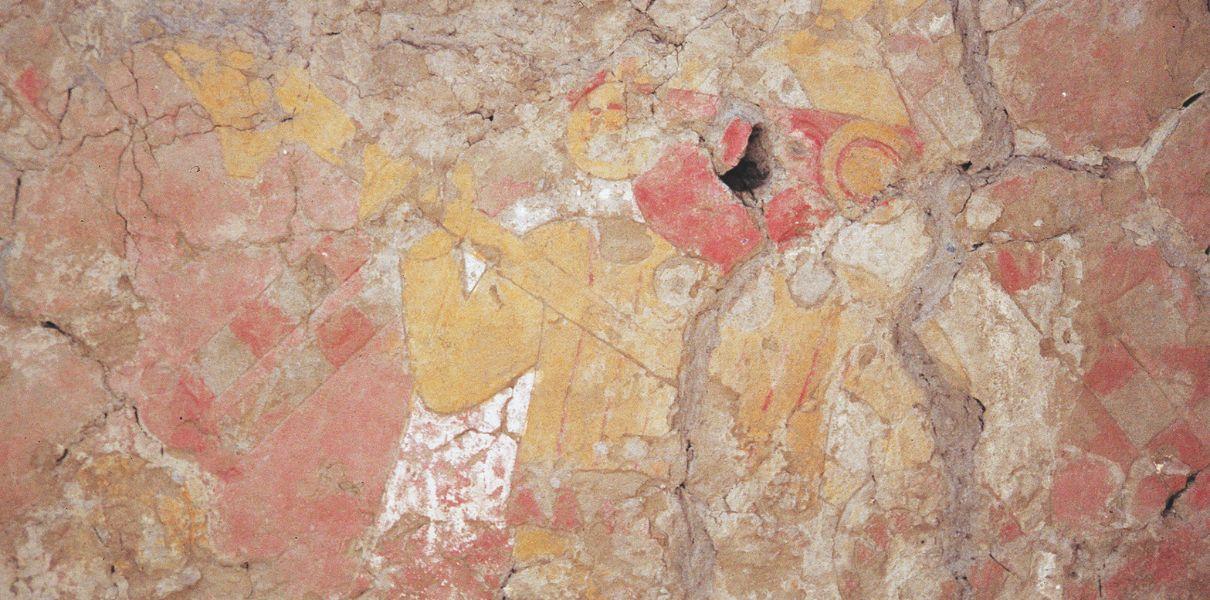
Although the chamber was altered and reused for Tomb 01B, analysis of the scattered remains stained with red pigment revealed that the original burial consisted of at least 11 individuals.
The principal individual in this earlier burial was identified as an adult woman, confirming an earlier elite female burial in this space.
Reused Chamber: Tomb 01B
Tomb 01B corresponds to a later construction phase that substantially altered and reduced the original funerary chamber by more than 56%. This modification incorporated new walls and niches.
The internal dimensions of this new chamber were:
- 2. 20 m long
- 1. 40 m wide
- 1. 40 m high
The space was prepared with a layer of sand and an adobe platform. The remains of two women were deposited in this tomb:
- A principal woman between 50 and 60 years old
- An accompanying woman between 18 and 21 years old
The principal woman had a visibly modified skull.
Funerary Assemblage and Offerings from Tomb 01B
The funerary assemblage from Tomb 01B consisted of 35 ceramic vessels placed in different parts of the chamber. Numerous objects made of metal, shell, and wood were also found associated with the principal individual.
Funerary Ceramics
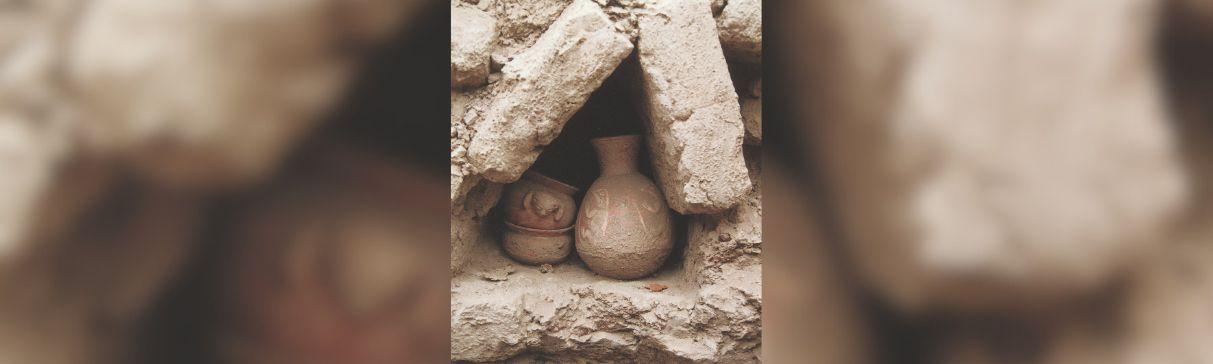
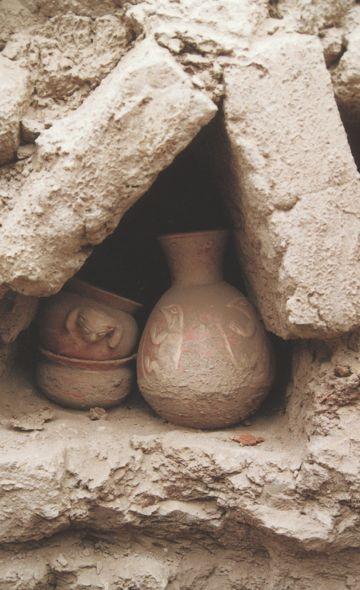
The funerary ceramics were distributed among the niches and across the floor. The niches contained:
- Jars
- Vessels with sculptural figures
- Stepped designs
- Zigzag designs
Among the sculptural figures were:
- A person carrying a net
- Modeled spoons
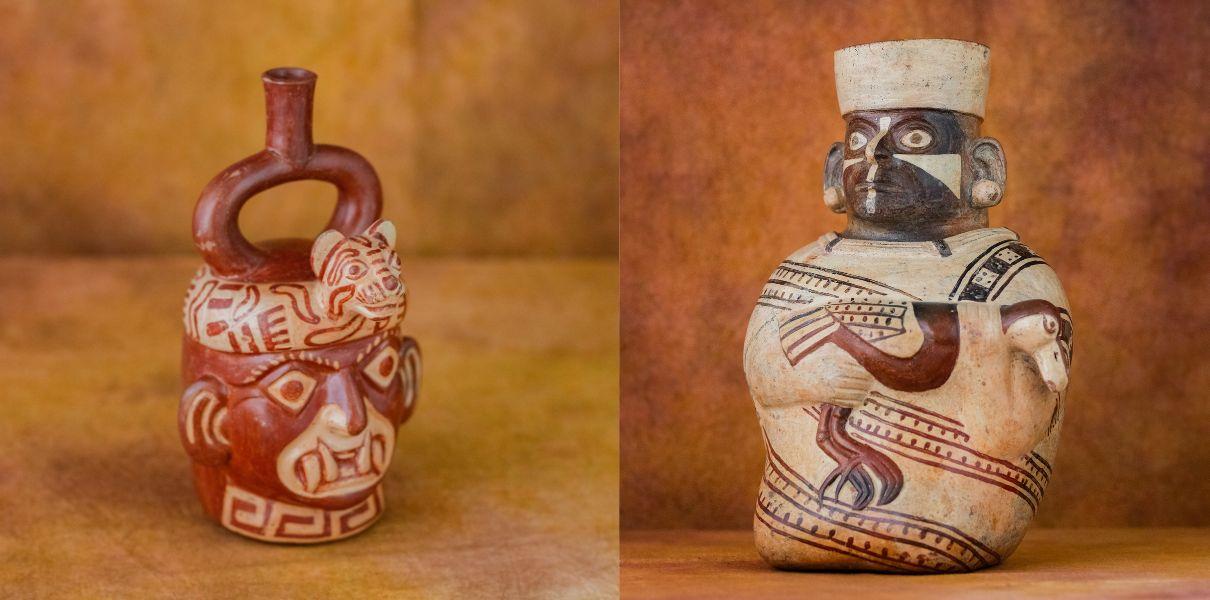
Fourteen stirrup-spout bottles with various iconographic representations were found on the floor. Notable examples include:
- Portrait vessels
- Hunting scenes
- Animal figures
The animal representations include:
- Camelids
- Shrimp
- Ducks
Personal Ornaments
The funerary assemblage of the principal woman in Tomb 01B included a collection of ornaments that attested to her high social status. A gilded copper bowl covered her face and showed traces of red pigment.
The following objects were found in her mouth:
- Eight pendants
- A gold sheet
The offerings also included:
- Wooden ear ornaments with green stone inlays
- Spondylus necklaces
- A gilded copper whistle
- Darts
- 63 spindle whorls and beads
In Summary
The repeated burial of women in elaborate tombs at Huaca Cao Viejo provides important information about Moche society. Among these cases, the discovery of the Lady of Cao and the burial in Tomb 01B stand out.
Similarities between the two contexts include valuable funerary assemblages and the presence of an accompanying individual alongside the principal figure.
In this context, archaeological research and future genetic studies may help determine whether the connection between the Lady of Cao and the woman from Tomb 01B goes beyond the similarities observed in their funerary practices.
Students , outstanding news