- Visitors
- Researchers
- Students
- Community
- Information for the tourist
- Hours and fees
- How to get?
- Visitor Regulations
- Virtual tours
- Classic route
- Mystical route
- Specialized route
- Site museum
- Know the town
- Cultural Spaces
- Cao Museum
- Huaca Cao Viejo
- Huaca Prieta
- Huaca Cortada
- Ceremonial Well
- Walls
- Play at home
- Puzzle
- Trivia
- Memorize
- Crosswords
- Alphabet soup
- Crafts
- Pac-Man Moche
- Workshops and Inventory
- Micro-workshops
- Collections inventory
- News
- Students
- Goldwork in the Burial of the Lady of Cao
News
CategoriesSelect the category you want to see:
Elite Moche Burial at Huaca Cao Viejo: The Principal Priest ...
Tumbas de élite mochica en Huaca Cao Viejo: la cámara decorada Moche Elite Tombs at Huaca Cao Viejo: The Decorated Chamb ...
To receive new news.

By: Complejo arqueológico El Brujo
The discovery of the funerary context of the Lady of Cao in 2005, at Huaca Cao Viejo, within the El Brujo Archaeological Complex, revealed a sumptuous collection of funerary goods.
This discovery stands out for the quality of its goldwork and the mastery of metalworking developed by Moche society.
Goldwork in Moche Society
Moche society developed sophisticated goldworking practices, reflected in objects made of gold, silver, and copper, as well as tumbaga, an alloy of copper and gold or copper and silver.
These objects demonstrated and reinforced the social status of the ruling classes.
Archaeological work has identified spaces associated with these activities. At the Huacas de Moche site, a metal-smelting furnace and a goldsmith's workshop were found within the site's urban core.
Moche Goldworking Techniques
Among the main goldworking techniques documented in Moche society was metal smelting.
The reduction of oxides allowed for the production of copper, silver, and gold.
Other techniques were also developed, including:
- Hammering
- Forging
- Repoussé
- Incised decoration
These techniques were used to create both utilitarian and ornamental objects.
The Funerary Goods of the Lady of Cao
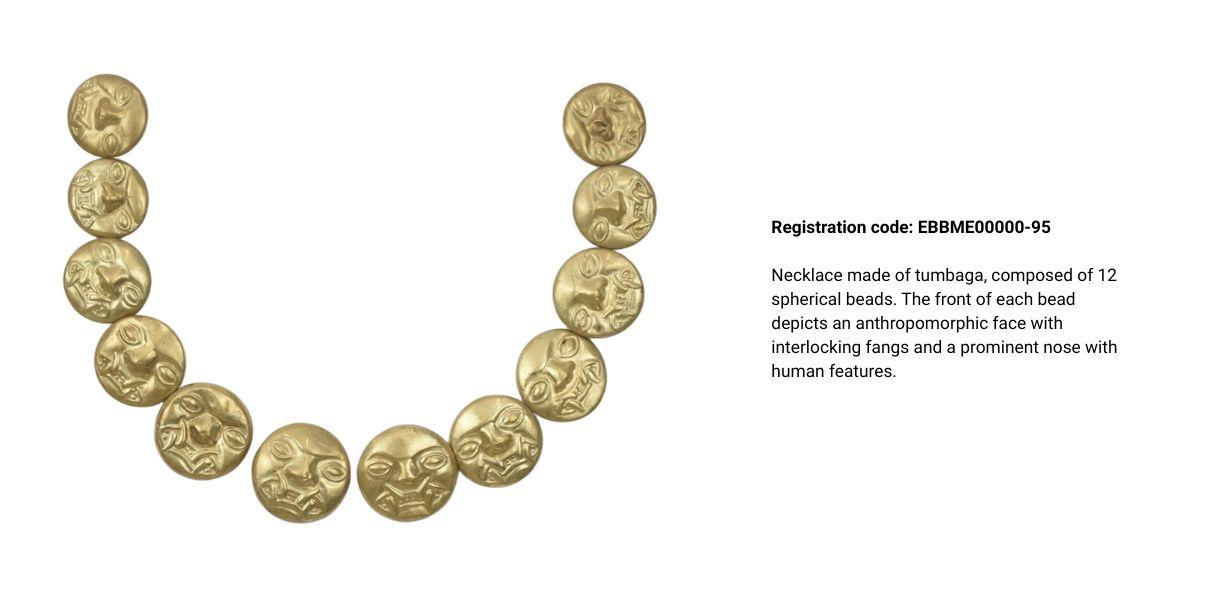
The metal artifacts found among the funerary goods of the Lady of Cao include objects such as:
- Mace heads
- Necklaces
- Headdresses
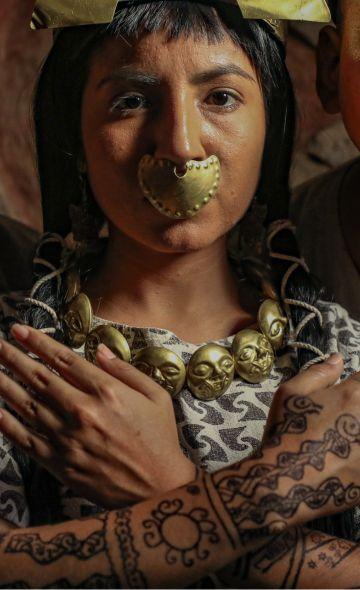
- Nose ornaments
These objects demonstrate her high social status and contrast with other Moche burials found at Huaca Cao Viejo.
The metal objects not only demonstrate the skill of Moche goldsmiths, but also show that part of this specialized production was devoted to funerary practices.
In this context, two folded metal nose ornaments were placed inside the mouth of the Lady of Cao.
Most Notable Metal Objects
The funerary goods of the Lady of Cao contain more than one hundred metal artifacts that express her social status.
Nose Ornaments
Among the most notable objects are 44 nose ornaments made of:
- Gold
- Silver
- Copper
- Tumbaga
Many of them are bimetallic and were made using techniques such as:
Hammering and sheet-metal working
- Repoussé
- Chiseling
- Gilding
Status Insignia
Her status insignia include:
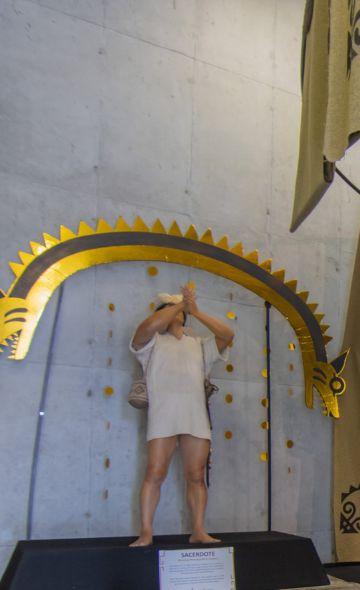
- Four headdresses
- Four gilded copper crowns
These were placed near her head and are distinguished by the motifs featured in their designs.
Two mace heads were also found on either side of the funerary bundle.
These were covered with sheets of gilded copper and made using riveting, hammering and sheet-metal working, and cutting techniques.
Other Funerary Goods
The burial also included:
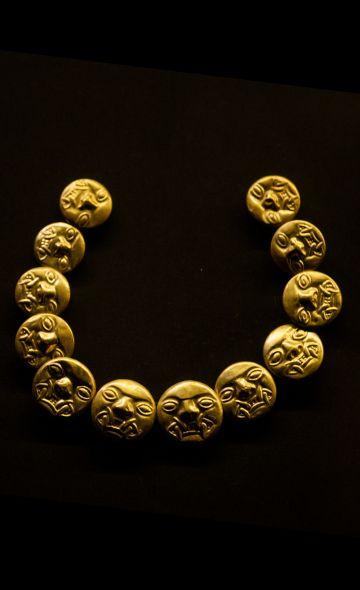
- 16 necklaces made of metal and semiprecious stones
- A pair of bimetallic ear ornaments
- Gold needles
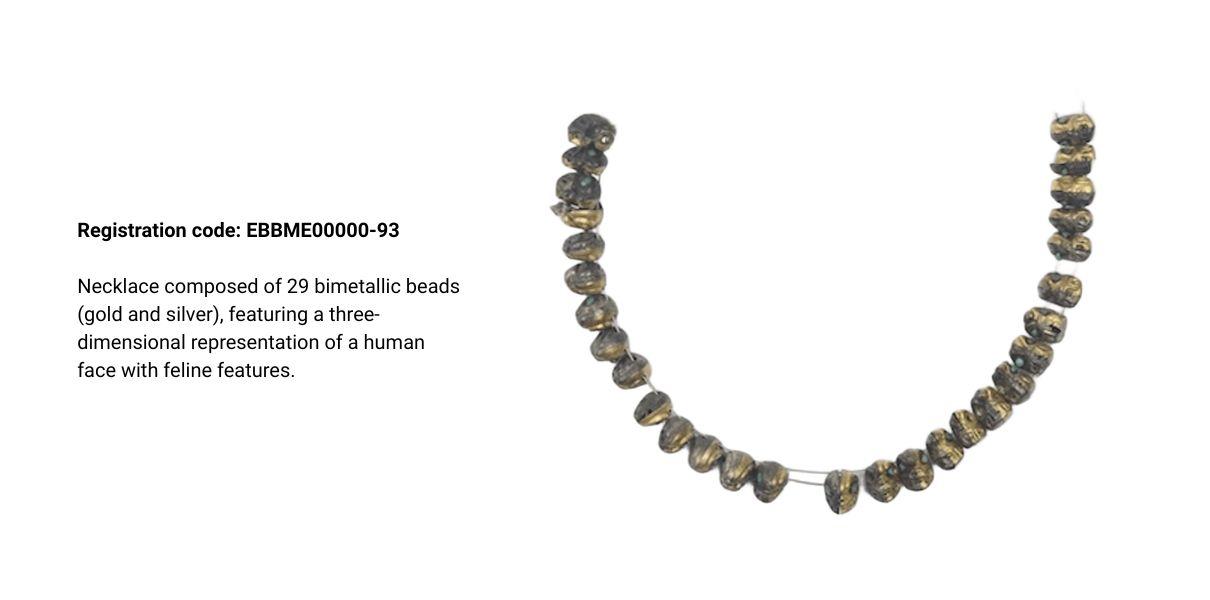
The beads of the necklaces frequently depicted feline heads.
Summary
The funerary goods of the Lady of Cao, discovered at Huaca Cao Viejo and dated to around AD 500, constitute a key collection for understanding the complexity of Moche goldworking.
The artisans demonstrated considerable skill and craftsmanship in working with gold, silver, copper, and tumbaga.
Using techniques such as hammered sheet-metal working, repoussé, openwork, soldering, and gilding, they created objects and emblems of power associated with the elite.
Discover these metal objects in Room 6 of the site museum at the El Brujo Archaeological Complex.
Students , outstanding news